
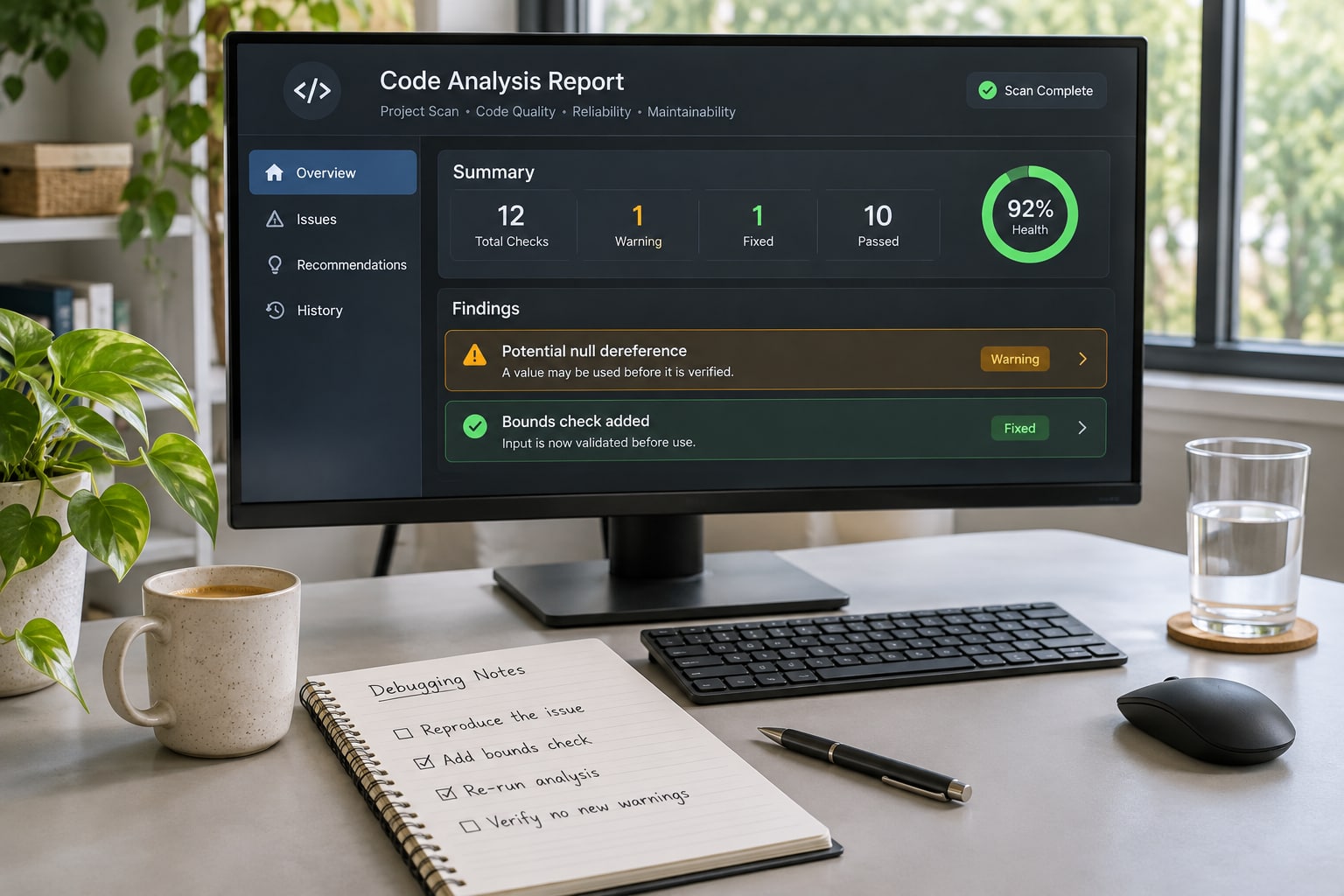
CodeQL 2.27.4: fewer alerts do not always mean less risk
Query accuracy and metadata are changing. Compare analysis results before concluding that a vulnerability disappeared.
CodeQLstatic analysisGitHub
Topic
Languages, frameworks, code platforms and delivery practices.
Developer tools directly affect quality, delivery speed and maintenance. This topic follows changes that deserve a team decision rather than a routine upgrade.
Query accuracy and metadata are changing. Compare analysis results before concluding that a vulnerability disappeared.

Receiving an event twice should not create two orders. Use identifiers, durable storage and recovery tests to make webhook processing reliable.

Indirect prompt injection, sensitive disclosure and excessive agency enter code scanning. The preview does not replace runtime controls.

The JavaScript and TypeScript preview adds call-path evidence. Understand verdicts, requirements and the shortcuts that weaken vulnerability triage.

Rate limiting calls for controlled retries, not faster loops. Combine Retry-After handling, bounded retry budgets and shared concurrency limits.

Dependency license compliance is generally available in GitHub Enterprise Cloud. Useful policy enforcement still needs owners and documented exceptions.

The version_requirement field helps enrich Dependabot alerts. Keep missing values, declared constraints and observed versions distinct in downstream dashboards.

GitHub's package firewall preview adds an installation-time gate. Its practical value depends on actual download routes and a deliberate exception process.

GitHub CLI can refresh expiring OAuth credentials automatically. Review scripts that copy tokens before assuming every existing workflow will keep working.

Firefox 158 adds JPEG XL and improves generated PDFs. Web teams still need to check their real content, preserve fallbacks and verify document usability.

More targeted creation and installation permissions give teams a reason to revisit automation that still depends on overly powerful GitHub credentials.

A withdrawn webhook action and HTTP 410 responses improve Dependabot integrations. Preserve the reason an alert disappears instead of counting every closure as a fix.

GitHub's workflow lockfile preview pins dependency commits. What it protects, what it does not, and how teams can introduce it without losing maintainability.

A specialised model joins GitHub secret detection. What remains included, what is still in preview and how to respond when a credential is exposed.
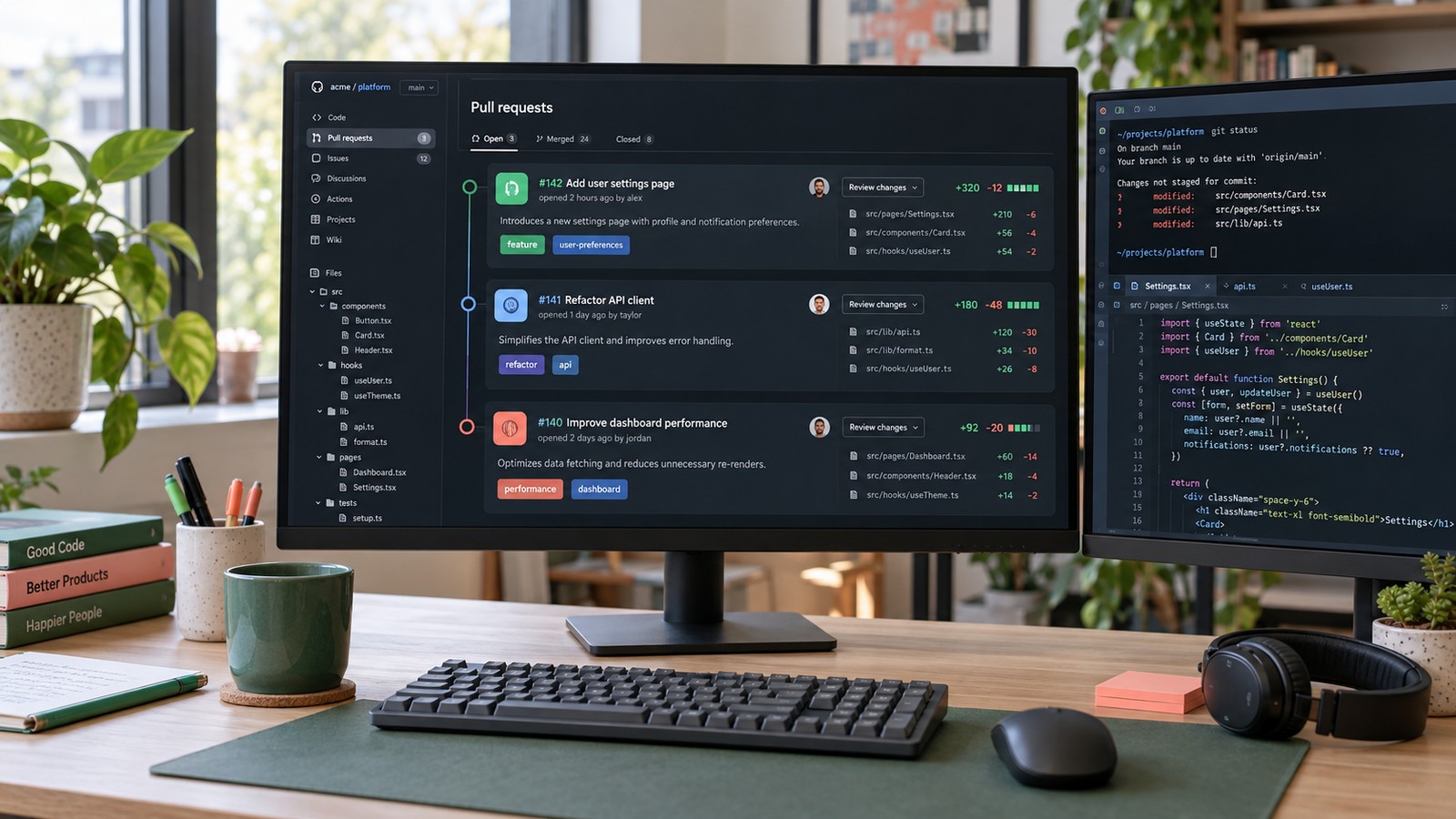
Stacked pull requests are generally available on GitHub. How to split a large change into focused reviews without creating an opaque dependency chain.
The asynchronous merge API is generally available for individual or stacked pull requests and merge-queue operations.
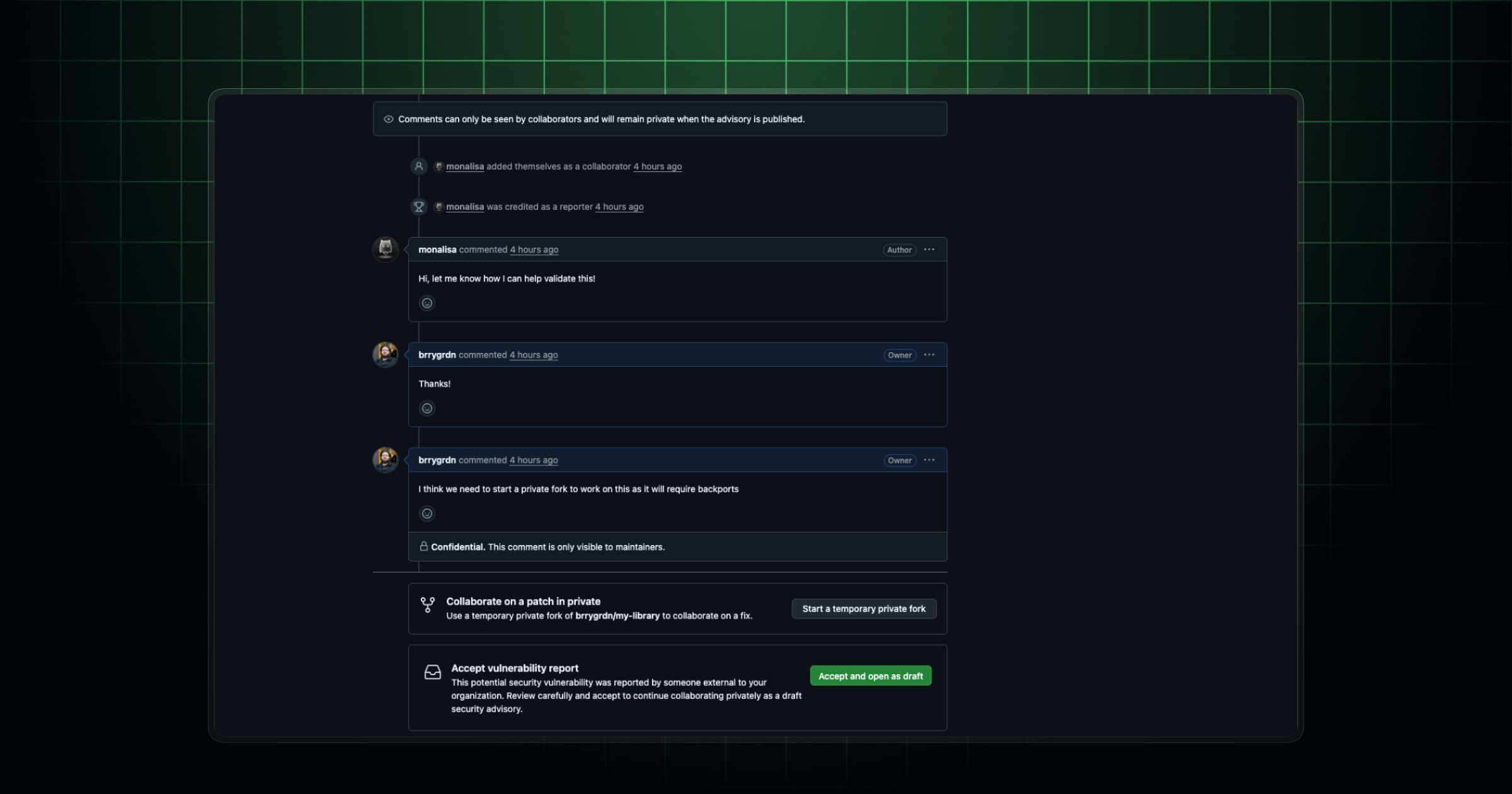
Maintainers can keep internal notes inside a security advisory without exposing them to the reporter or invited collaborators.

GitHub App installation tokens are growing to roughly 520 characters, exposing databases, proxies or redaction rules with rigid assumptions.
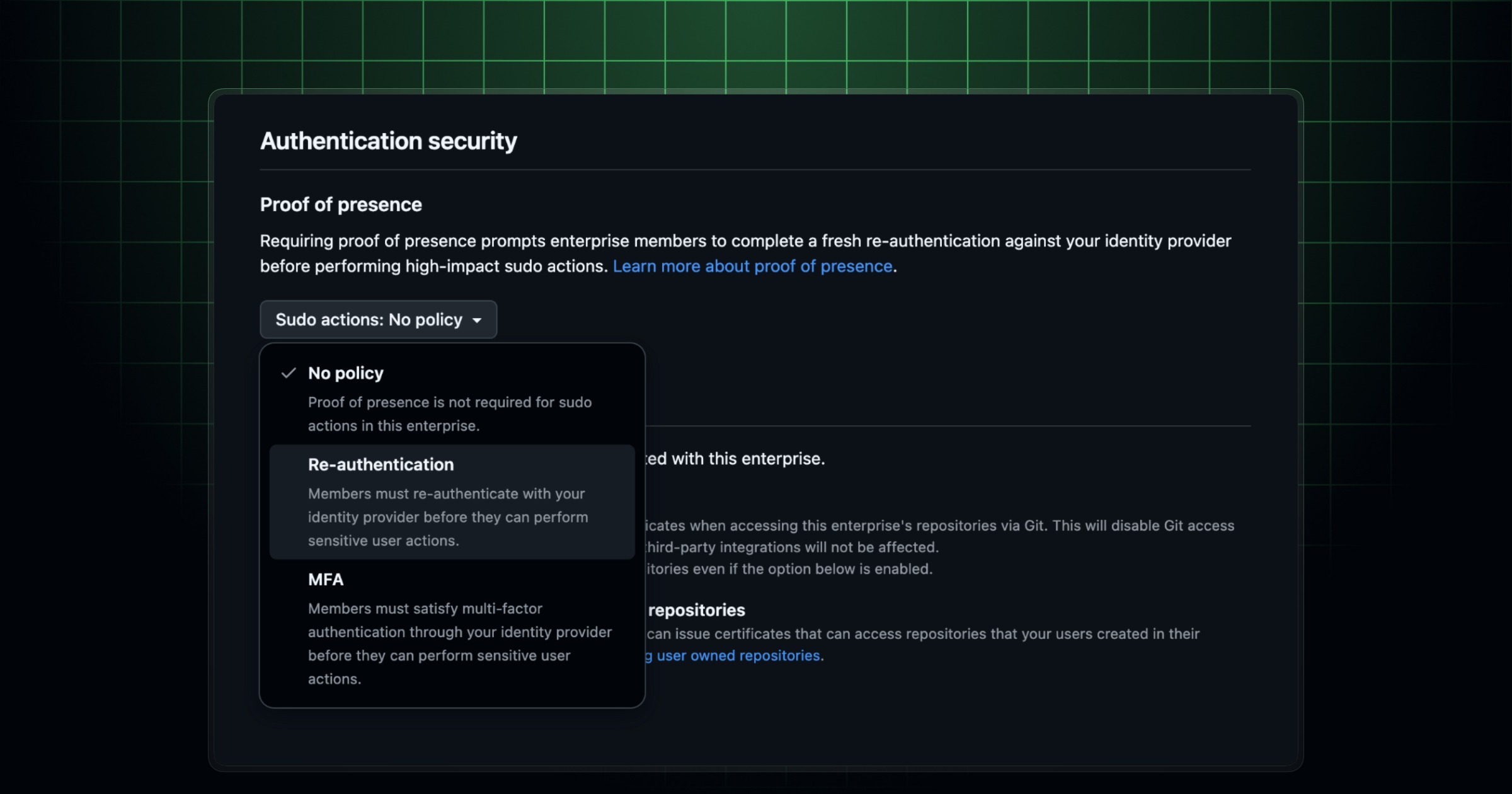
GitHub Enterprise can require fresh authentication or an MFA challenge before token creation, webhook changes and other critical operations.
github.com and partner CDNs now reject SHA-1 in HTTPS, potentially breaking old clients and network appliances.
AI pull-request scanning can now run when CodeQL default setup is disabled, subject to Advanced Security policies.

GitHub used its own agents to port the Copilot runtime to Rust, showing both the leverage and limits of agent-assisted development.

Microsoft gives applications an age band and verification status without disclosing the user's full date of birth.
GitHub brings CodeQL to Linux ARM64 and expands detection for Rust, Micronaut, ASP.NET Core, OData and PostgreSQL libpq.

Proposals are open until September 23 to select features browser vendors will jointly improve for interoperability during 2027.

Copilot Code Review can submit an approval that counts toward merge rules. The feature remains off by default and can be restricted by path.

Five Rust optimizations cut the footprint of a DNS entry by 56% at Cloudflare. Here are the lessons for systems operating at extreme scale.

Rust 1.97 enables v0 mangling, surfaces linker messages and rejects warnings without needlessly invalidating build caches.

MCP's new stateless foundation simplifies load balancing, serverless and failover, while requiring a controlled migration.

OpenAI offers three GPT-5.6 models at very different prices. Capabilities, availability, caching and evaluations: a task-level selection method.

GitHub now separates its public program from a better-paid VIP tier. The platform wants to reward deep research instead of submission volume.

The playground, catalog, inference API and BYOK disappear on July 30. Teams should treat the shutdown as a genuine platform migration.

GitHub Copilot browser tools in VS Code are broadly available. For frontend teams, the real value is the edit, observe and correct loop.

The Node.js calendar is moving toward an annual cadence from Node 27. Teams that only follow LTS should update their monitoring.

TypeScript keeps improving developer experience. Teams mainly need to align configuration, bundler and runtime.

Editorial sites need to be fast, easy to publish and flexible enough for interaction. Nuxt fits that compromise well.

React 19 stabilized several server-side building blocks. Teams need to decide where data, rendering and interactivity belong.

The Rust 2024 edition shows how the language evolves without abruptly breaking the ecosystem. It is a lesson for backend migrations.

Every API changes. Maturity appears in how teams warn, measure and support breaking changes.

Putting projects together is not enough. Without cache, ownership and conventions, the monorepo slows everyone down.

Tokens structure colors, spacing and typography. Their real value comes from governance, not the JSON file.