

An import receives an error and immediately retries. Every worker does the same until the service becomes even less available. For 429 Too Many Requests, recovery should not mean running the same loop faster.
This analysis concerns HTTP client behaviour. It does not assume every provider calculates quotas identically or that one delay suits every API.
Read the signal correctly
MDN describes 429 as a rate-limiting response. It may include Retry-After, represented as seconds or an HTTP date according to the header format. The header is not mandatory.
The 429 reference and Retry-After documentation explain the protocol. Read the provider's rules to establish which operations share a quota.
Set a retry budget
Our advice is to define both the maximum attempts and total acceptable duration. Without boundaries, retries can hide stalled work for hours.
Choose an explicit outcome when the budget runs out: preserve work for later, inform the user or stop with an understandable reason. In progress should not become a permanent state.
Respect the requested delay too. If it exceeds the operation's acceptable lifetime, postponing work cleanly is better than ignoring the signal and pretending progress is continuing.
Consider combined concurrency
We recommend counting requests across all workers sharing a limit. Ten processes respecting independent local rates can still exceed a common quota together.
A useful test starts several consumers simultaneously in a validation environment. Observe what happens when the limit appears and after it clears.
Where appropriate, add controlled variation to retry delays so every consumer does not restart at the same millisecond. Keep that strategy bounded and consistent with the provider's instructions.
Do not blindly replay writes
Distinguish a read from an operation with business effects. Before retrying a creation or payment, inspect the API contract and its intended deduplication mechanism.
Retain an operation identifier to investigate attempts without recording secrets or entire sensitive payloads. Diagnosis needs context, not a full copy of everything processed.
A well-behaved client does more than hide the 429 response. It slows down measurably, preserves work and makes successful, failed and deferred operations distinguishable. That control makes an integration sustainable, not a very large retry counter.
During review, ask how someone will stop the work and understand what remains incomplete. A recovery loop should make the situation manageable for an operator rather than merely keep a process alive indefinitely.
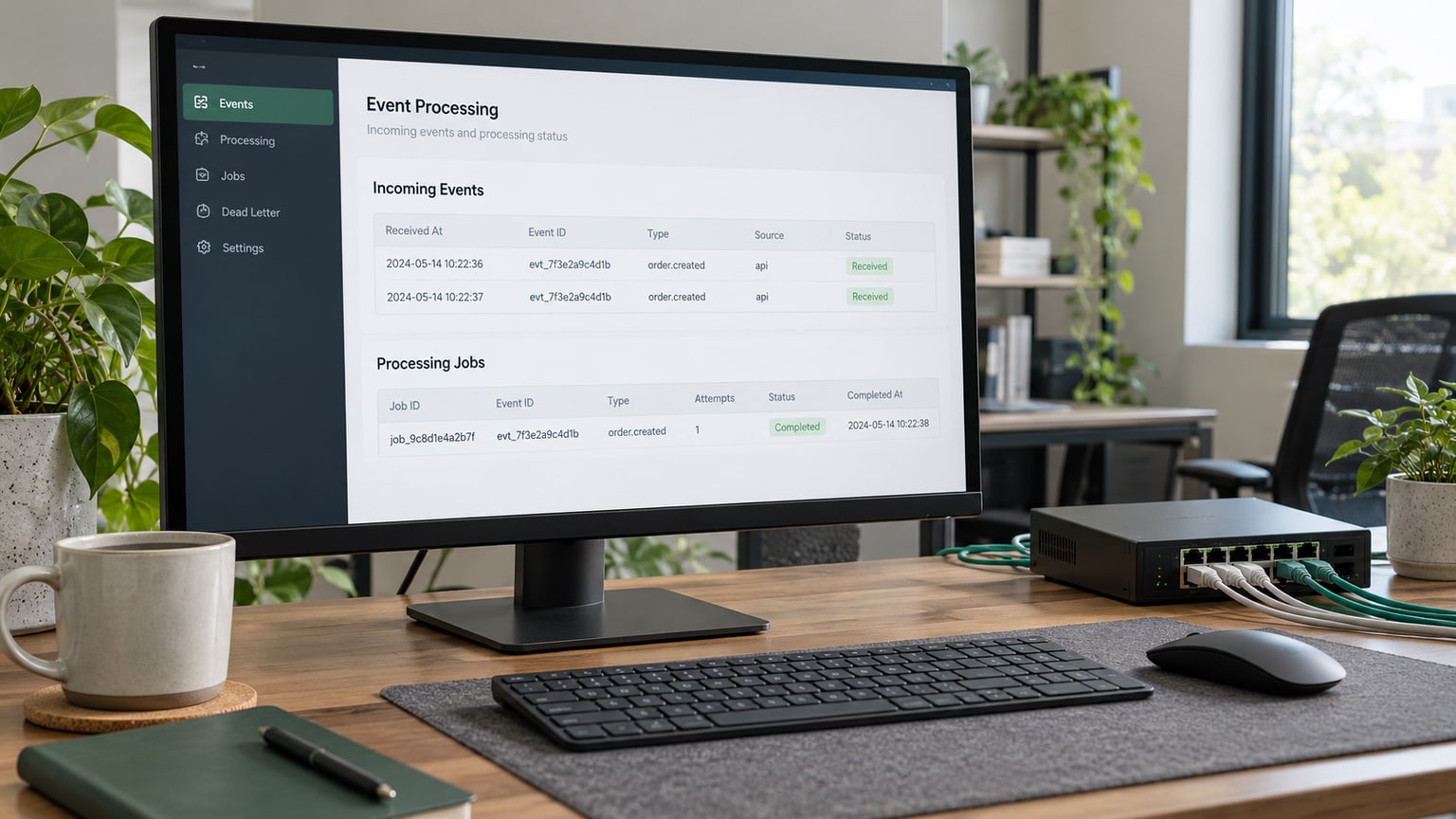
Cover: generated illustration, not real traffic measurements.


Join the discussion
Comments
Loading comments…