
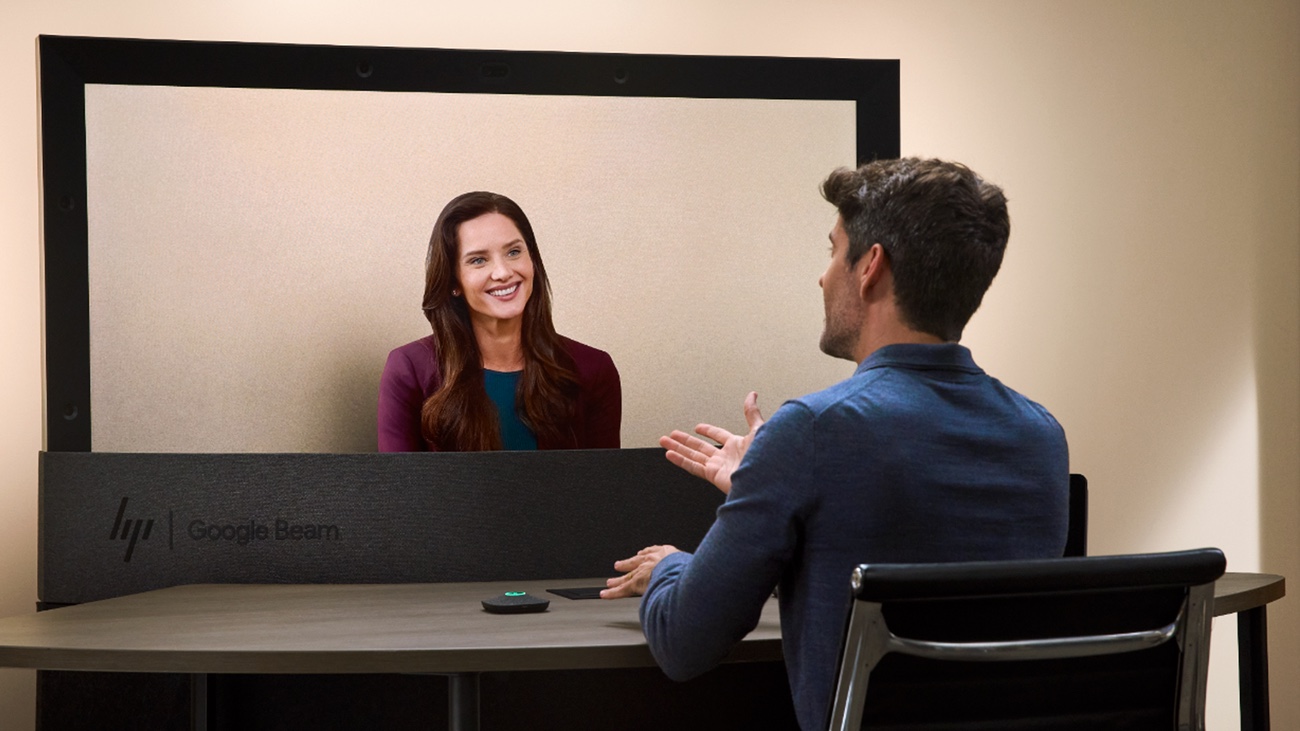
Google is expanding Beam to France, the UK, Germany, Japan and Canada. The system uses multiple cameras and a spatial display to make remote participants appear to share the same table without wearing glasses.
The short answer
| Question | Answer |
|---|---|
| Is it a Meet application? | No. Beam relies on dedicated audiovisual equipment. |
| Is a headset required? | No. The display and camera system create the depth effect. |
| Who installs it? | Google announced a global network of 18 integrators and distributors. |
A room rather than an app
Beam is not intended to replace every video call. It equips spaces where visual presence justifies a larger investment: interviews, strategic meetings, training and creative collaboration. International rollout depends on partners able to calibrate the room, sound, lighting and network.
Internal results require caution
Google cites an eight-week internal study in which teams felt 50 percent more connected, found feedback 33 percent easier to understand and needed 21 percent fewer follow-up meetings. These figures describe a vendor-selected environment and do not establish cost or outcomes for every organisation.
Avoided travel is the strongest benefit
A more natural image can be valuable when it replaces a trip rather than an ordinary Meet call. For international recruiting or scarce expertise, a few well-placed rooms may reduce travel while preserving more non-verbal information.
What French customers should measure
Organisations need full pricing, bandwidth, maintenance, interoperability and video-processing terms. A useful pilot compares Beam with a conventional room on the same workflow and measures avoided trips, actual utilisation and participant satisfaction over several weeks.


Join the discussion
Comments
Loading comments…