
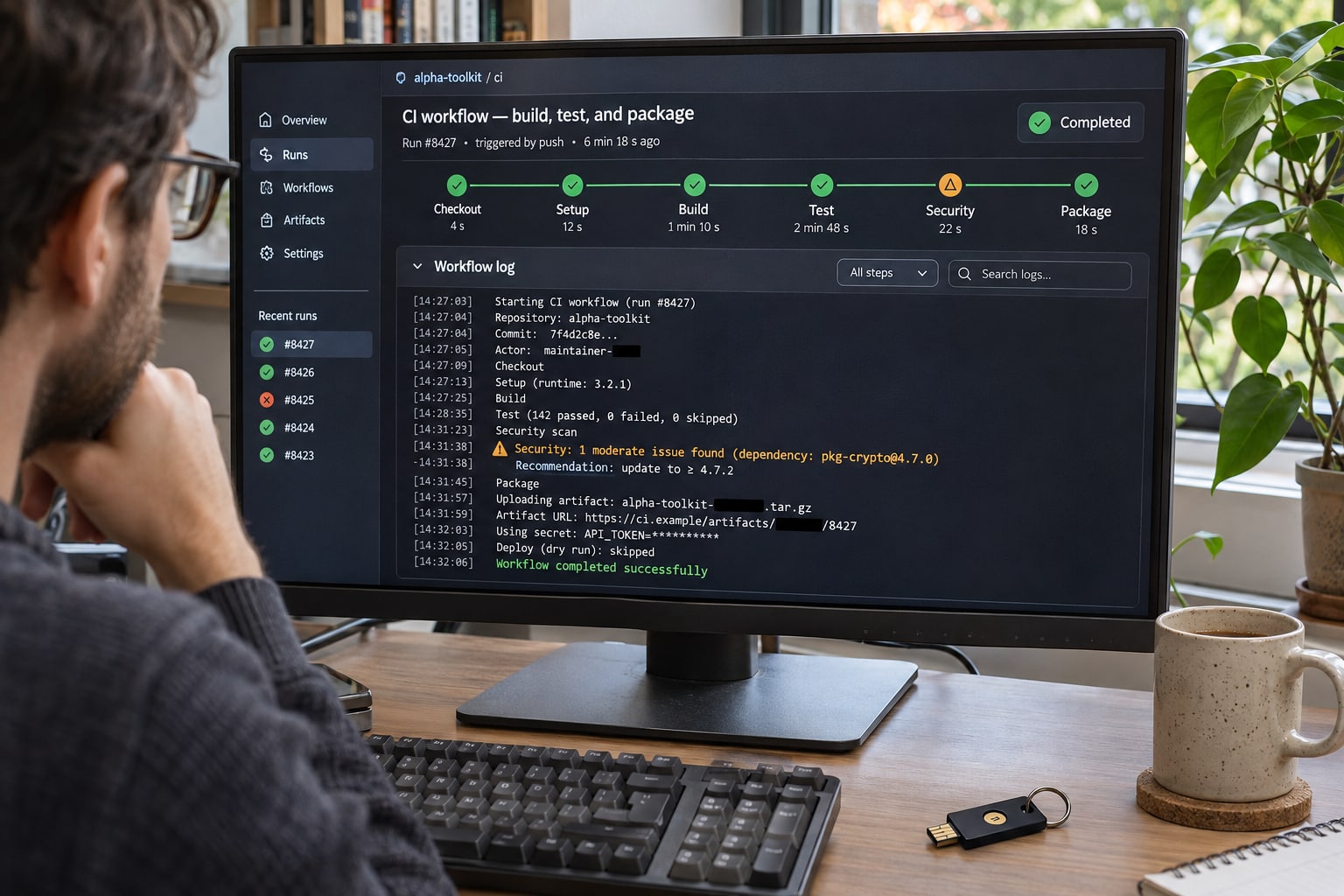
A credential can stay out of the repository yet appear in a job's output. On November 9, GitHub announced a public preview for detecting secrets in GitHub Actions logs, with boundaries worth reading before assuming your pipeline is covered.
The official announcement targets eligible Enterprise Cloud enterprises with Secret Protection or Advanced Security. The policy is disabled by default, not automatically enabled for every GitHub account.
Establish what gets scanned
The feature examines runs completed after activation, without backfilling old logs. The preview uses provider patterns; exclusions include generic and custom patterns, AI-detected secrets and values already masked by Actions.
Inventory credentials actually used by CI. A key outside recognised coverage does not become safe merely because no finding appears.
Keep preventive measures too: avoiding sensitive output is preferable to discovering it after execution. Review diagnostic commands and third-party tool output.
Our recommendation is to record the feature's scope beside your existing controls so that another maintainer does not infer broader coverage from its name.
Arrange deliberate review
Findings enter the repository alert list, but do not generate notifications during this preview. Assign consultation to a person or an explicit process.
Separate detection, ownership and resolution. An alert page can exist without anyone reviewing it. The useful measure is not only the number of findings, but whether a verified case reaches someone able to act.
Use documented, authorised test facilities to assess the process. Do not publish a real credential merely to demonstrate that scanning works.
Respond without copying the secret
For confirmed exposure, identify the credential, revoke or replace it through the relevant service and investigate its use. Removing a log line does not remove the power of a token that remains valid.
Keep necessary diagnostic evidence in a restricted location. Pasting entire job output into an open ticket may multiply copies of the information you are trying to contain.
Alerts can remain available after log deletion. Treat them as signals requiring assessment, not proof that the value remains published in the same place.
Document the resolution separately from the act of closing an alert. Another reviewer should be able to understand which access changed and what was checked.
Connect this with other controls
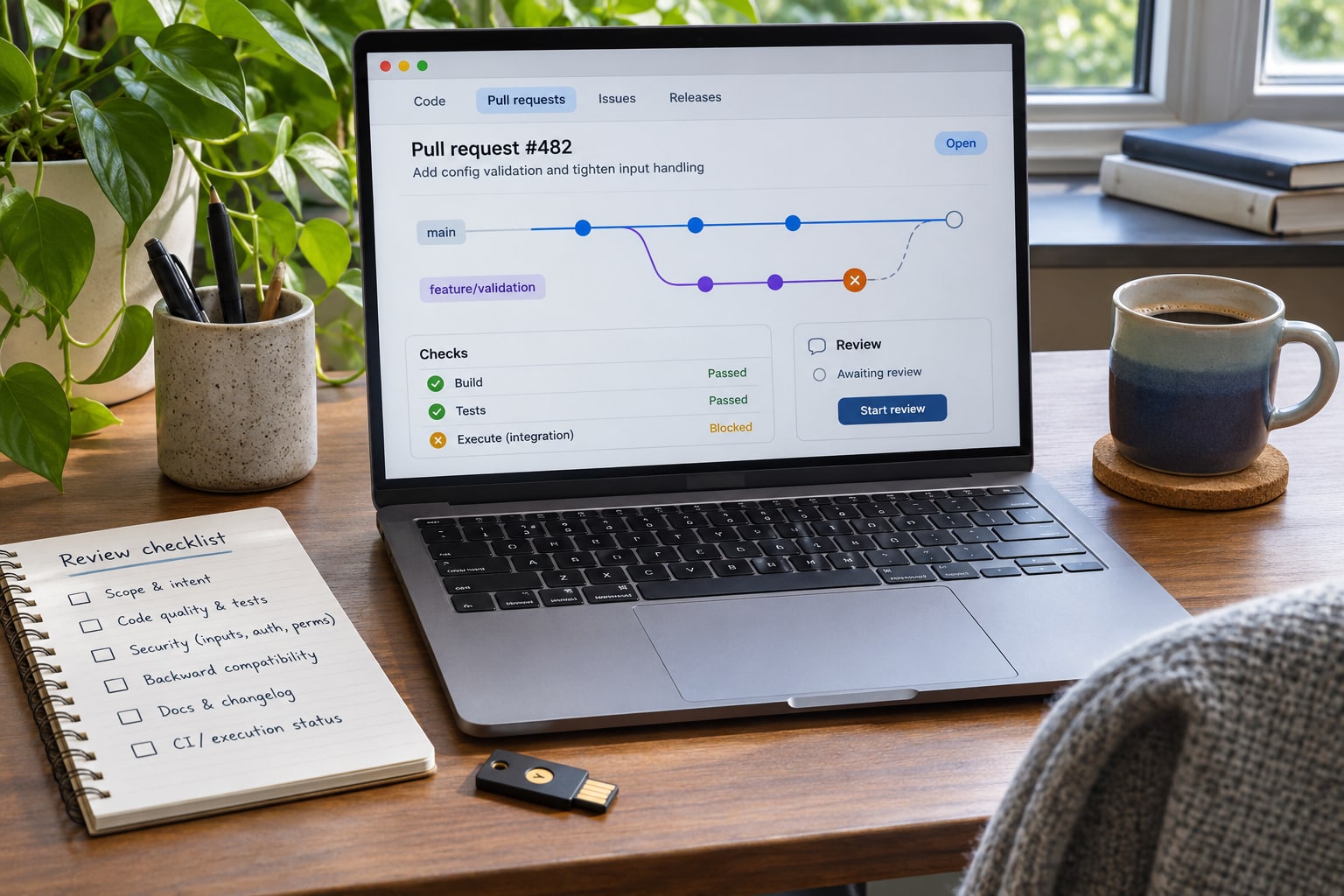
This complements our Actions execution-policy article. Controlling who can trigger work and identifying disclosed data are distinct defences.
Maintain an owner inventory, rotation procedure and post-resolution check. Detection becomes useful when it produces a traceable decision rather than silently adding a number to a dashboard.
Cover visual: generated editorial illustration, not an official screenshot.

Join the discussion
Comments
Loading comments…