
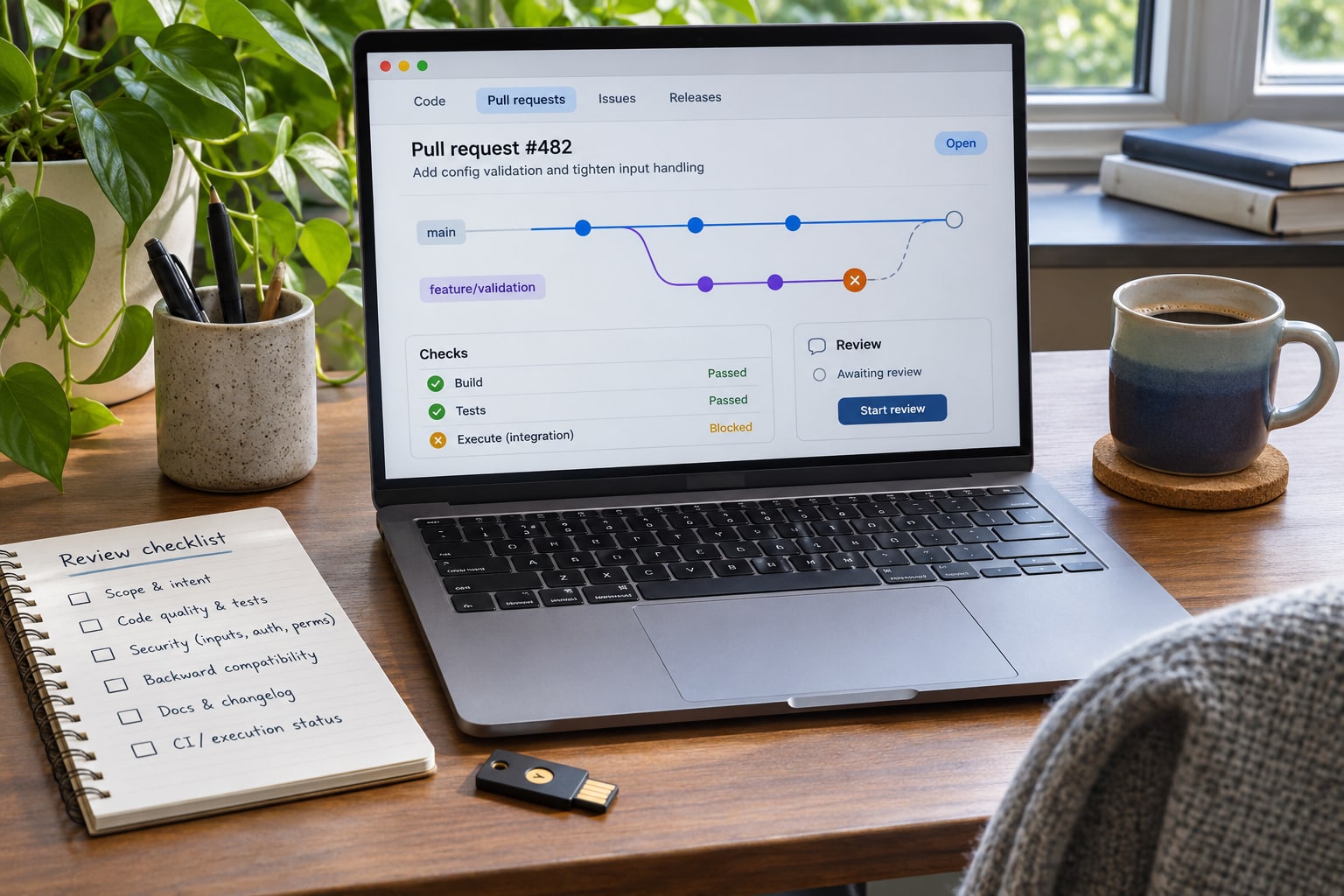
A pipeline can fail without an application-code change: an execution policy may block its triggering event. On November 2, GitHub announced a default block on pull_request_target in public repositories from December 2, 2026, unless an applicable policy permits it. This does not mean all pull-request workflows are being removed.
The official announcement also schedules another temporary enforcement window for November 16, from 16:00 to 18:00 UTC, or 17:00 to 19:00 in Paris. The November 9 window is already past at this article's scheduled publication. Private and internal repositories are outside this change.
Identify the actual trigger
Our recommendation is to inventory affected workflows, their owners and their purpose. Some label contributions; others execute commands or manipulate files. Those activities do not carry the same risk.
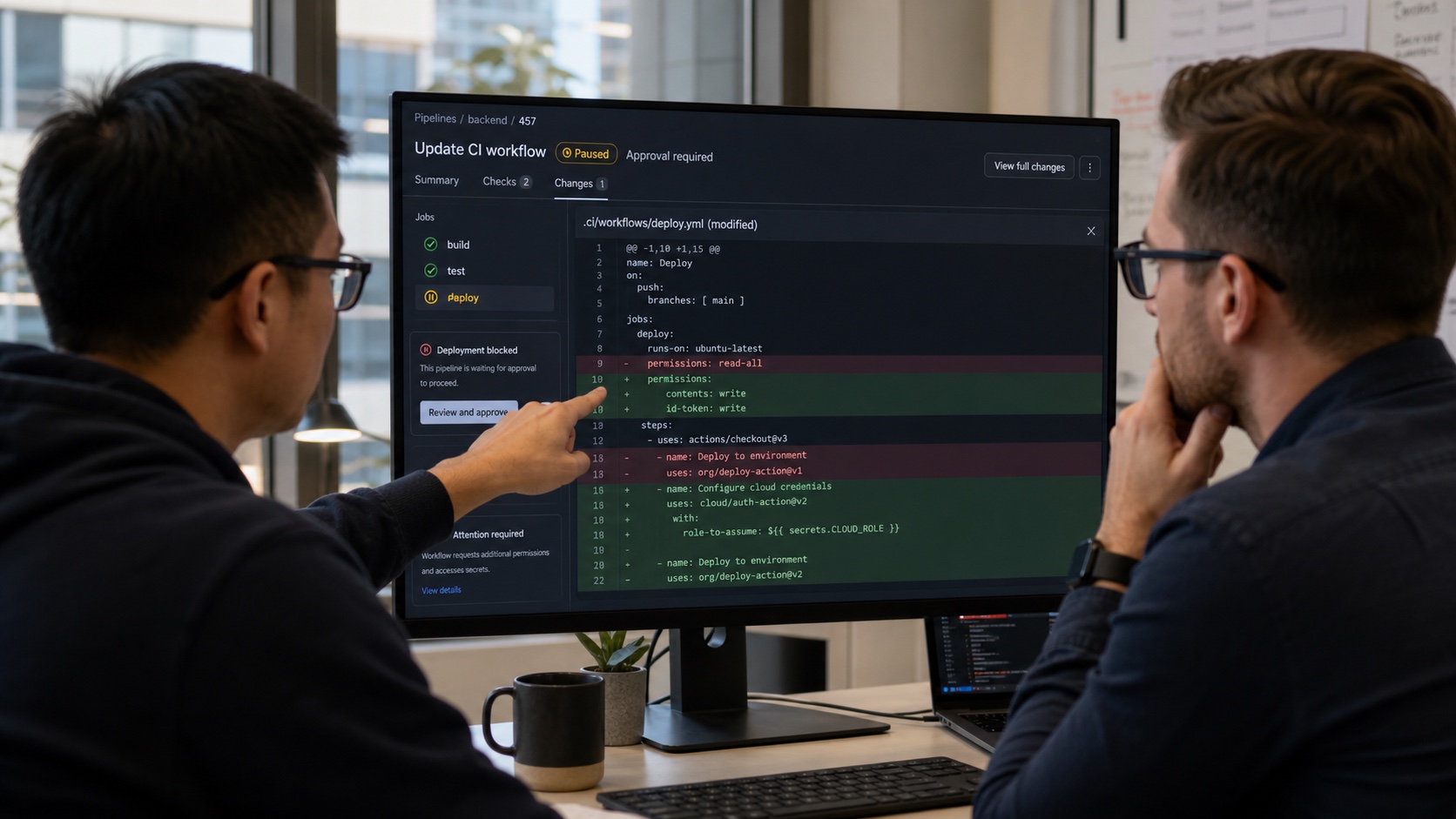
The critical point is the privileged context of pull_request_target. A workflow that fetches and executes untrusted code can expose the base repository's access. An external contribution should not become an indirect route to running privileged commands.
Review what the workflow does, rather than deciding solely from its filename. A harmless-looking maintenance label does not establish that every invoked script is harmless.
Review evaluation before adding an exception
GitHub documents execution policies and their observation. Use that information to identify runs that would be denied, then compare them with genuine maintenance requirements.
We suggest recording an intended outcome for each workflow: remain blocked, be replaced or receive a narrow permission. A successful run today does not establish that future enforcement will have no effect. Equally, a failure during an enforcement window does not mean your application itself is broken.
Do not broadly reopen access for a green check
An exception should address a named requirement. Expanding every permission to restore a green pipeline removes the protection the change is intended to provide.
Our advice is to separate tasks that inspect contributions from tasks holding write access or secrets. Review indirectly invoked scripts and third-party actions too: the main YAML file does not always reveal the entire execution path.
Prepare the next check
Before November 16, test the chosen approach in a validation repository and document the necessary access. Decide who will observe the window and how a blocked contribution will be handled.
This change complements our article about locked Actions dependencies. Pinning what is downloaded and controlling who can trigger execution solve different problems. Neither control substitutes for the other.
Cover visual: generated editorial illustration, not an official screenshot.


Join the discussion
Comments
Loading comments…