

A pipeline can remain unchanged in your repository yet execute different code tomorrow. A referenced action only needs to move its tag. GitHub announced general availability of Actions workflow lockfiles on October 28, separating a readable dependency reference from the commit actually executed.
The official announcement covers Free, Team and Enterprise Cloud, including data residency. This article uses information checked on October 29, not a presumed new November launch.
We previously covered the lockfile preview. This follow-up addresses general availability and adoption review; locking itself is not a new invention in this announcement.
What the general availability announcement confirms
The gh actions-lock GitHub CLI extension generates .github/workflows/actions.lock. Locking covers actions, transitive dependencies and reusable workflow references. Adoption can happen one workflow at a time; each dependency of an onboarded workflow must be recorded.
GitHub also says Dependabot updates the corresponding entry when proposing an action update. Administrators can require locking, and a check can detect stale lockfiles without rewriting them.
Review the initial file as a delivery decision
Our recommendation is not to treat the first generated file as administrative housekeeping. It records components that you accept running with your automation's permissions.
Start with a limited workflow, such as tests in a repository without production secrets. Compare expected references with resolved commits. An unexplained difference deserves investigation before merging, even when generation succeeds.
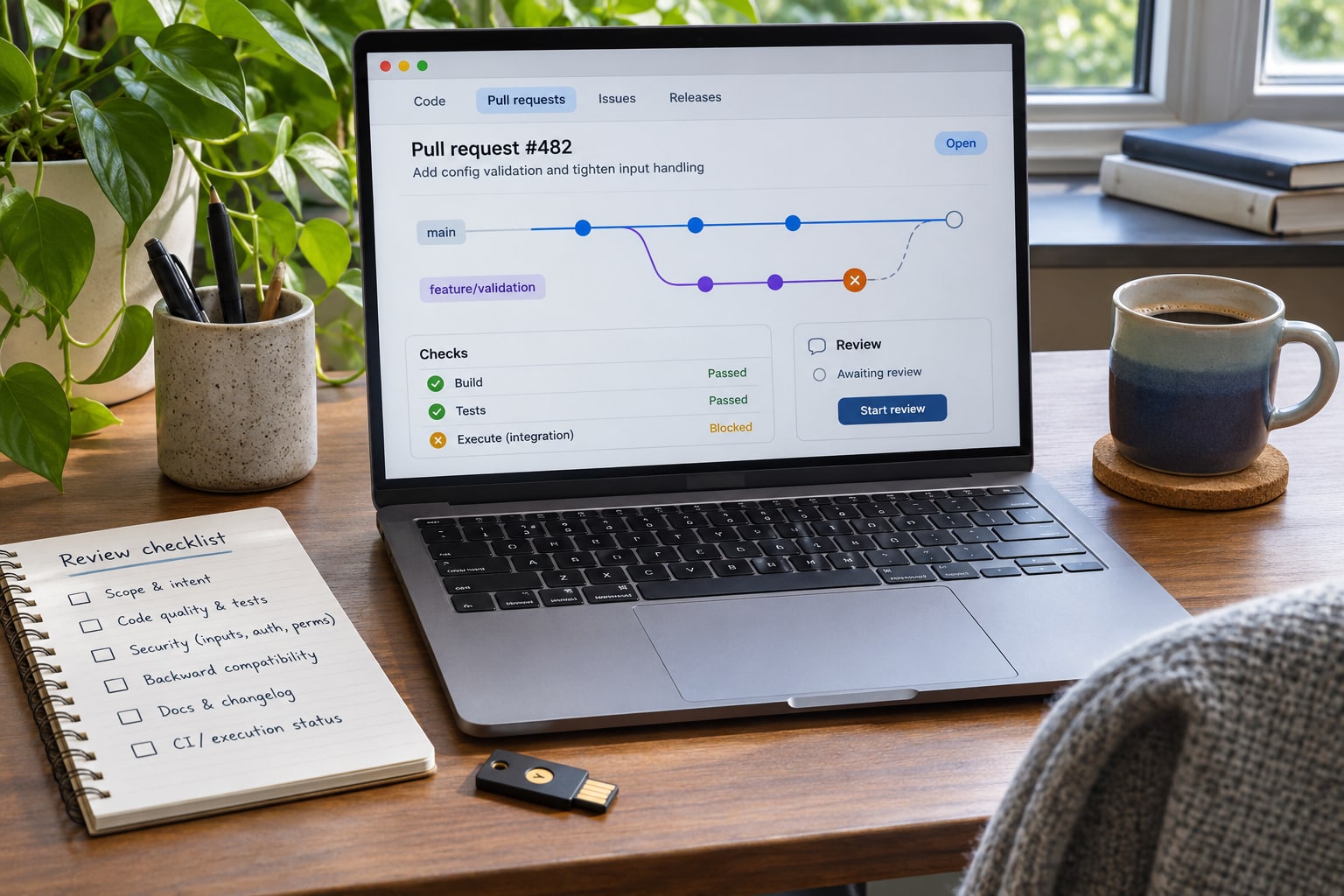
Review workflow and lockfile together in the same pull request. A functional change paired with an outdated record can create confidence that the actual execution does not support.
For a pilot, ask another developer to follow the review without verbal explanation. If the relationship between a dependency and its recorded commit remains unclear, improve the process before making it mandatory across the organisation.
Pinned does not mean harmless
An immutable commit can still contain a vulnerability or unwanted behaviour. Locking reduces surprises from moving references; it does not replace dependency selection or permission restrictions.
Inspect access to repository contents, tokens and artifacts. An action that formats text should not inherit deployment privileges merely because sharing one broad token was convenient.
Apply the same scrutiny to commands inside scripts. Downloading and executing a remote file from within a locked action introduces another dependency. Review that separately rather than assuming the enclosing action has made everything reproducible.
Make discrepancies visible in a pilot
The following is our proposed review protocol, not a list of additional GitHub requirements. In a test repository, retain a reference result and add locking in a separate branch. Ask someone familiar with the workflow, but not responsible for generation, to review the files.
| Observation | Question before wider adoption |
|---|---|
| A reference resolves to an unexpected commit | Which origin was approved and how can it be checked? |
| A check detects a stale record | Does its message explain how to propose the correct fix? |
| A security update arrives | Who has enough context to review and deliver it? |
| A dependency leaves the workflow | Can reviewers understand the new execution set? |
Record review time and exceptions. A stricter mechanism that fails without explanation is likely to be bypassed during the first incident. A short, understood and tested correction can instead become an ordinary team habit.
Do not combine this first experiment with a complete runner and permissions redesign. Independent changes make the cause of a failure harder to isolate. Expand afterwards through comparable workflow groups, with a named person available to answer migration questions.
For every group, retain an example of a successful update and a rejected inconsistent change. Those examples make onboarding easier and help distinguish intended enforcement from an unrelated infrastructure problem.
Make updates deliberate, not impossible
The opposite mistake would be freezing dependencies indefinitely. Assign ownership for update proposals and retain a way to deploy urgent fixes quickly.
Test three situations during adoption: an ordinary update, a stale lockfile and a newly introduced dependency. Check actual execution and whether the failure message makes sense to a developer encountering the mechanism for the first time.
Also document how an exceptional rollback should work. Reconstructing a previous pipeline should not require guessing which old reference happened to work on another person's runner.
The useful outcome is not a high count of locked lines. It is being able to explain which code ran for a given commit, and replace that code intentionally when a correction becomes necessary.
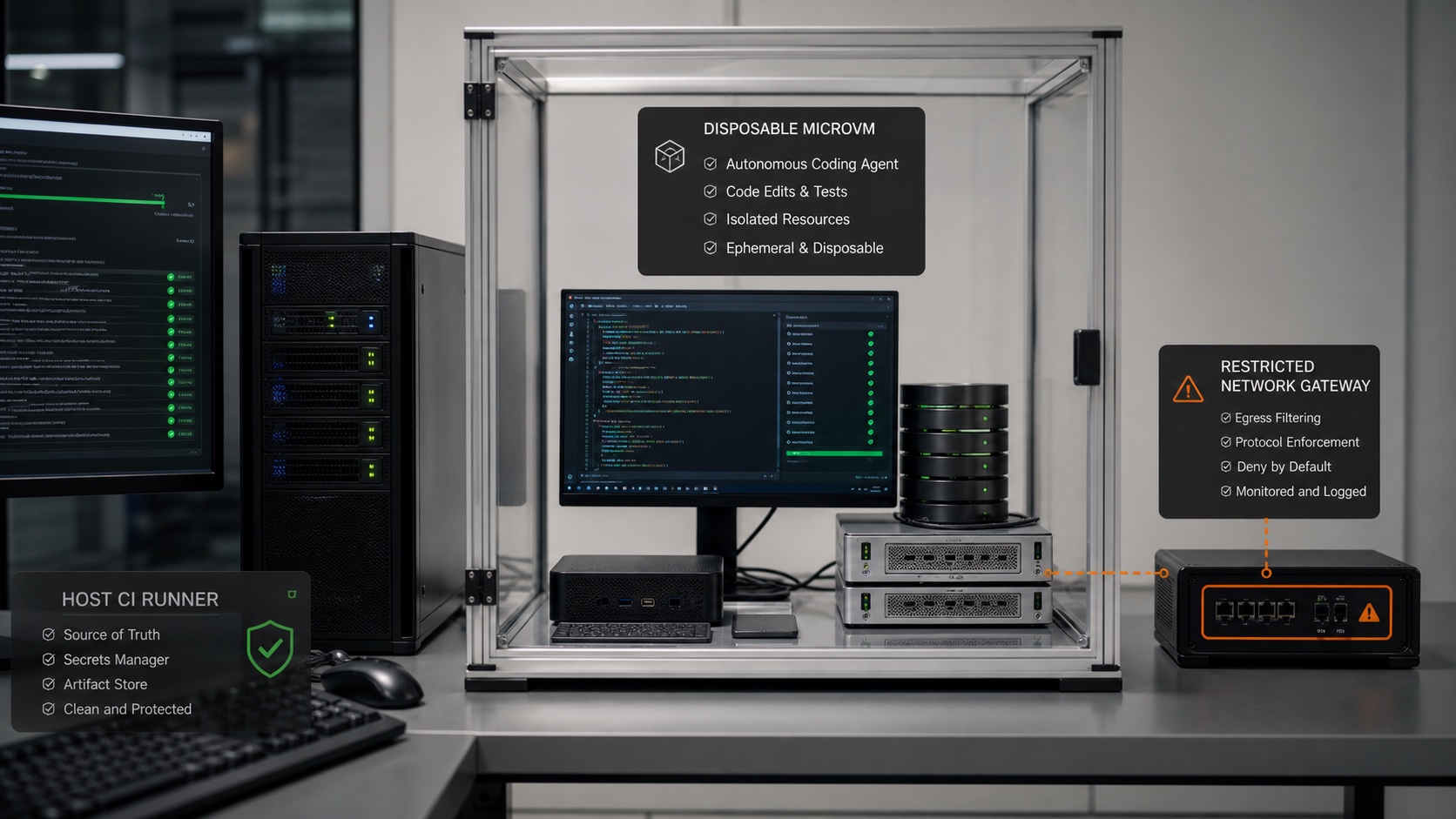
Cover visual: generated editorial illustration, not an official screenshot.

Join the discussion
Comments
Loading comments…