

A database's next major release should be investigated before deployment day. DuckDB opened a 2.0 alpha on September 2 while explicitly saying it was not intended for production. It is a useful opportunity to find incompatibilities, not an invitation to replace a stable engine immediately.
Meanwhile, DuckDB 1.5.6, published on September 28, shows that the stable branch continues to receive fixes. The announcements address different needs: maintaining existing workloads and preparing future ones.
Separate exploration from maintenance
The alpha announcement invites testing and issue reports. The 1.5.6 release mentions correctness, crash and security fixes. Trying a preview is therefore not a substitute for tracking stable releases.
Our recommendation is to create a separate environment with copied data and identified dependencies. Prevent an exploratory notebook from accidentally reusing an important database path. An explicit directory name and isolated configuration provide simple protections.
For an automated pipeline, preserve the exact engine version in the test report. Merely writing “version 2” is not enough when comparing multiple prereleases.
Results matter as much as speed
Start with representative queries: aggregations, joins, file reads and type conversions. Compare values, row counts and expected errors before measuring execution time.
A speed improvement is meaningless if a date is interpreted differently or an aggregate silently changes. Edge cases are often more informative than the demonstration query that has worked for months.
Include deliberately imperfect inputs: missing fields, null values, unusual characters and mixed date formats. The purpose is not to trick the engine, but to reproduce the defects your imports actually encounter.
Do not publish a general performance claim from one successful query. Your workload may contain a very different mix of file access, sorting and aggregation.
Inventory the extensions
Extensions are part of DuckDB's appeal, so their compatibility needs checking separately from SQL behaviour. The alpha announcement discusses extensions such as httpfs, ducklake, iceberg and spatial in that context.
List loaded extensions, their versions and any external resources they access. A query that works with a local CSV may fail in the real pipeline when storage access or dependencies differ.
This inventory also helps diagnosis. It distinguishes an engine problem from an incompatible extension or incomplete network configuration.
Produce a useful issue report
A good report contains an exact version, minimal query, small reproducible dataset and expected result. Remove sensitive information before sharing the example.
Finally, agree on migration criteria in advance: matching results for essential jobs, validated extensions and a rollback procedure. A successful alpha experiment prepares that decision; it does not make it for you.
Keep the production upgrade separate from the preview experiment, so an exploratory success cannot accidentally become an unreviewed deployment.
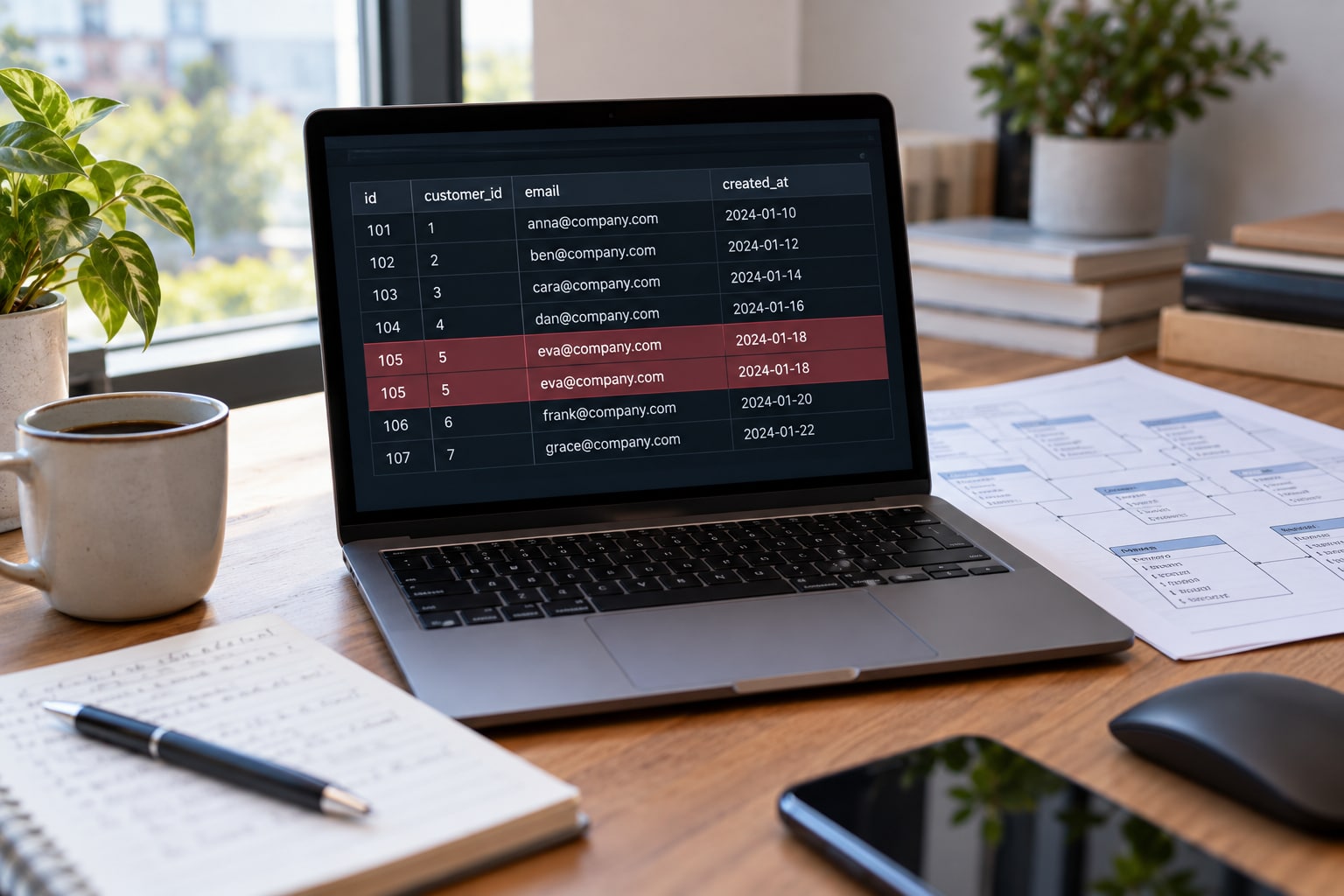
Cover visual: an illustration generated for this article, not an official service screenshot.


Join the discussion
Comments
Loading comments…