

Writing technical documents has become faster. Establishing whether their arguments hold remains demanding. Deep Review, publicly announced by Google Research on October 14, targets that gap between producing a document and checking it.
The potential benefit is not automatic approval. It is surfacing questions sooner so people can spend their attention on the answers that matter.
Several agents, followed by synthesis
Google describes document segmentation, allocation of reasoning effort, parallel section reviews and a final synthesis. The announced launch formats are PDF and plain text; support for multiple files is described as forthcoming.
Google also says uploads are not used to train its models, but are retained for one year for display in the interface. No training does not mean no retention. Review those conditions before sending sensitive material.
Ask for objections rather than reassurance
Our recommendation is to treat this kind of system as a challenger. For an architecture proposal, ask which assumptions need additional evidence, rather than asking whether the document is good enough to approve.
Consider a hypothetical proposal that promises quick recovery after an incident but never explains how the data will be restored. A comment exposing that omission could improve the proposal. It would not demonstrate that recovery works.
The value appears when feedback leads to an experiment, measurement or clarification. Generating a lengthy report and leaving every observation unresolved does not reduce uncertainty.
Give people ownership of the response
We suggest sorting feedback into confirmed problems, questions worth investigating and irrelevant observations. For each confirmed issue, name an owner and specify the evidence required to close it.
That avoids two extremes: accepting every criticism as correct, or discarding the entire report because one suggestion is wrong. A useful review process can tolerate an imperfect assistant without treating it as either an authority or a gimmick.
Preserve the version that was analysed. Without a stable reference, readers may not know whether a finding applies to the current document or to wording that has already changed.
Start with a low-sensitivity document
Before wider adoption, choose a document whose weaknesses the team already understands. Compare the output with known problems, then measure the time spent resolving findings, not merely the speed of report generation.
This launch also connects to contextual privacy in AI agents. Verification software can help without becoming the final authority. Decisions remain stronger when observations lead to readable evidence and people take responsibility for the conclusions.
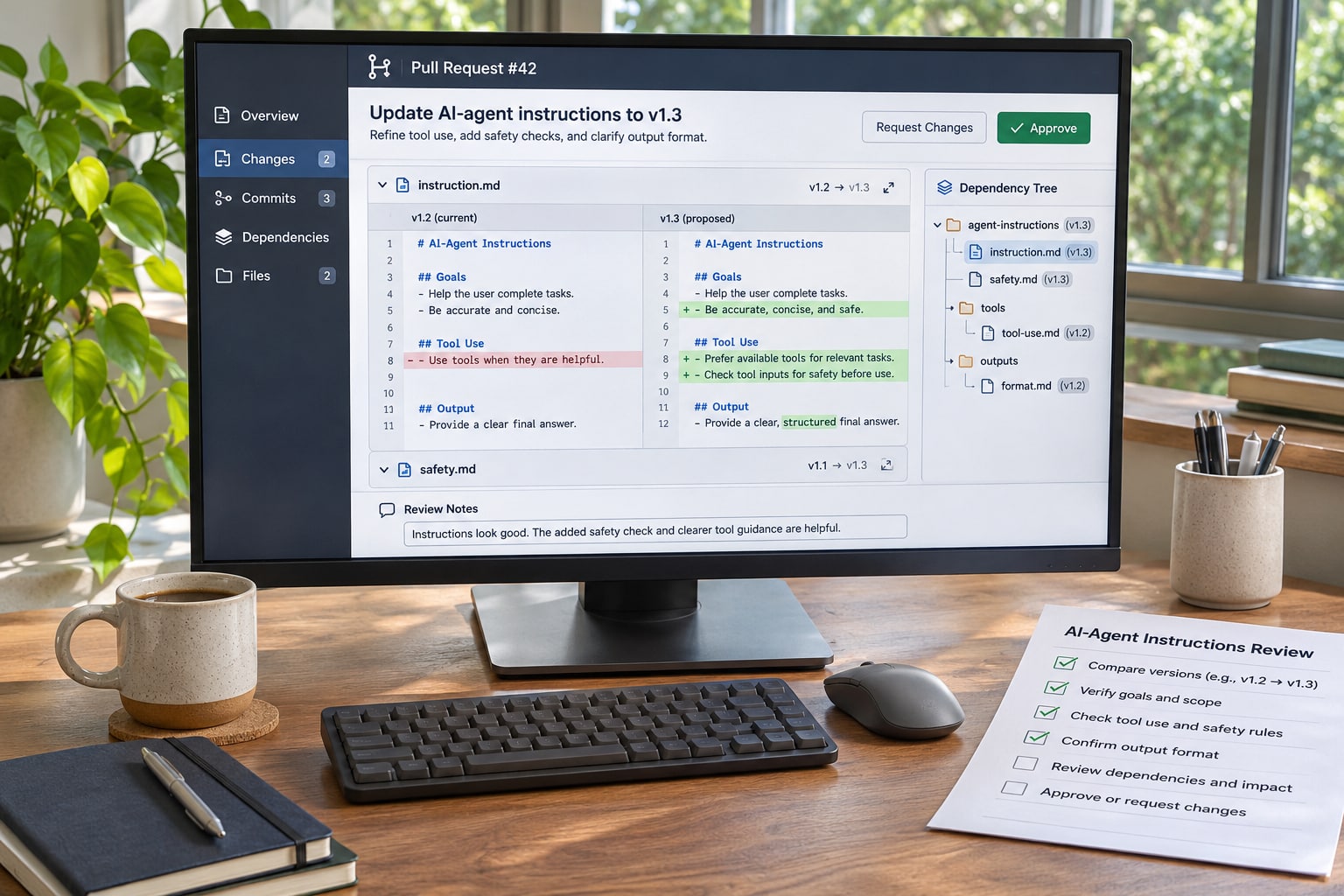
Cover image: generated illustration, not a screenshot of Google's service.


Join the discussion
Comments
Loading comments…