
AWS Lambda now offers scalable network bandwidth for functions outside a VPC with at least 2,048 MB of memory. Sustained throughput can reach 3,000 Mbps at 10,240 MB, up from the previous 625 Mbps ceiling.
The short answer
| Question | Answer |
|---|---|
| Which functions qualify? | Functions outside a VPC with 2,048 MB of memory or more. |
| Is the speedup automatic? | Capacity increases, but code needs parallel connections to use it fully. |
| Is action required? | AWS currently requires a corresponding Service Quotas request. |
Memory now controls more network capacity
Above 2 GB, each additional gigabyte adds roughly 280 Mbps of sustained throughput up to 3 Gbps. This makes memory tuning more strategic: a higher millisecond rate can reduce duration enough to improve both latency and, in some cases, total cost.
One connection is not enough
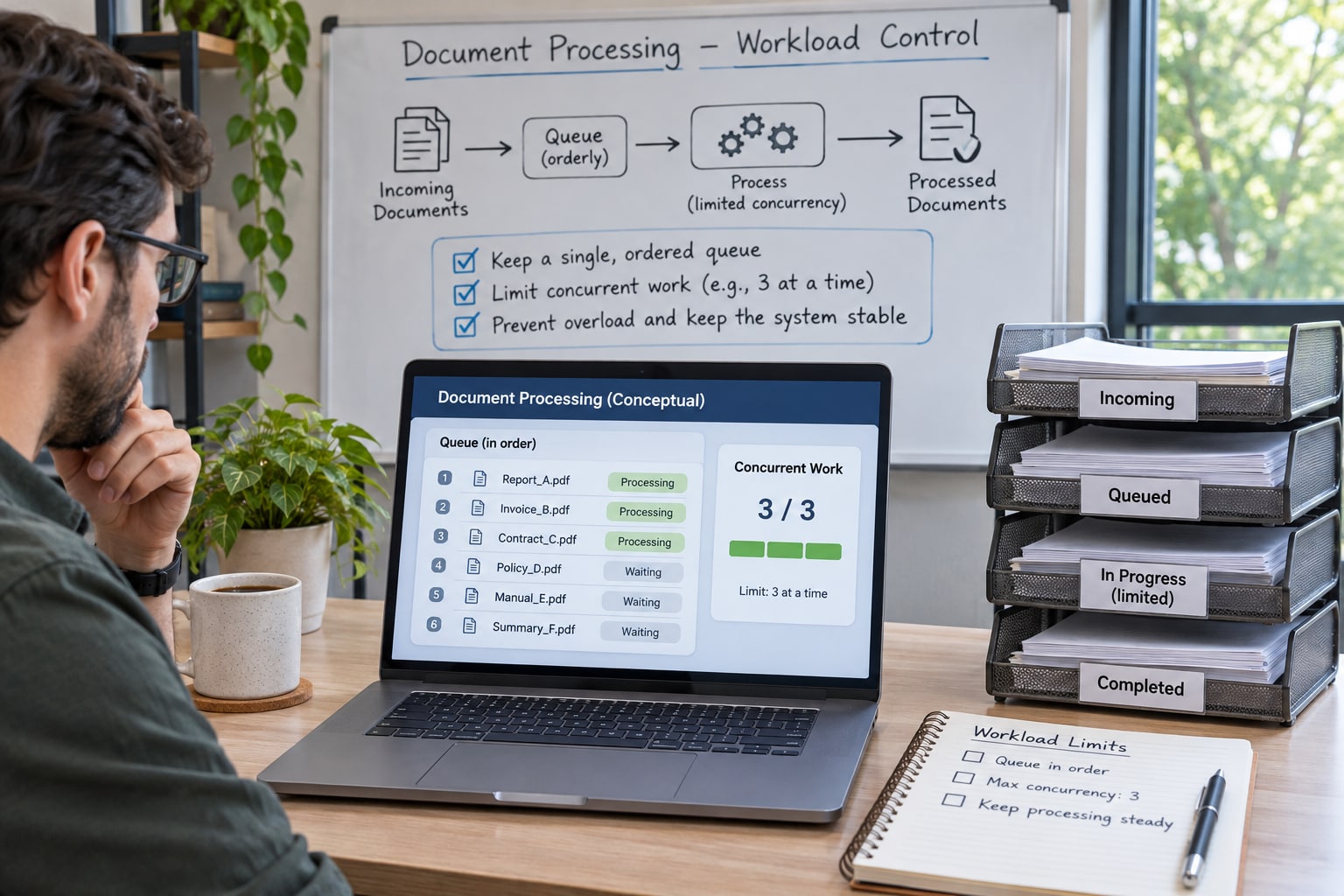
Downloading one object over one connection may not use the available capacity. AWS recommends Boto3’s Common Runtime transfer client, which can split an object and download parts in parallel. Measure the complete path instead of assuming that extra memory automatically accelerates processing.
Benchmarks must resemble production
AWS reports 62.9% lower median latency in its 10 GB, twenty-function example. Results depend on partitions, cold starts, regions, S3 connections and environment reuse. Keep the dataset and method stable and repeat measurements before changing production sizing.
VPC functions remain outside the scope
The launch applies to functions not attached to a VPC. Architectures that need private resources should evaluate other options rather than extrapolating these numbers. Include quota availability, memory cost and S3 concurrency in the decision alongside the actual latency objective.


Join the discussion
Comments
Loading comments…