
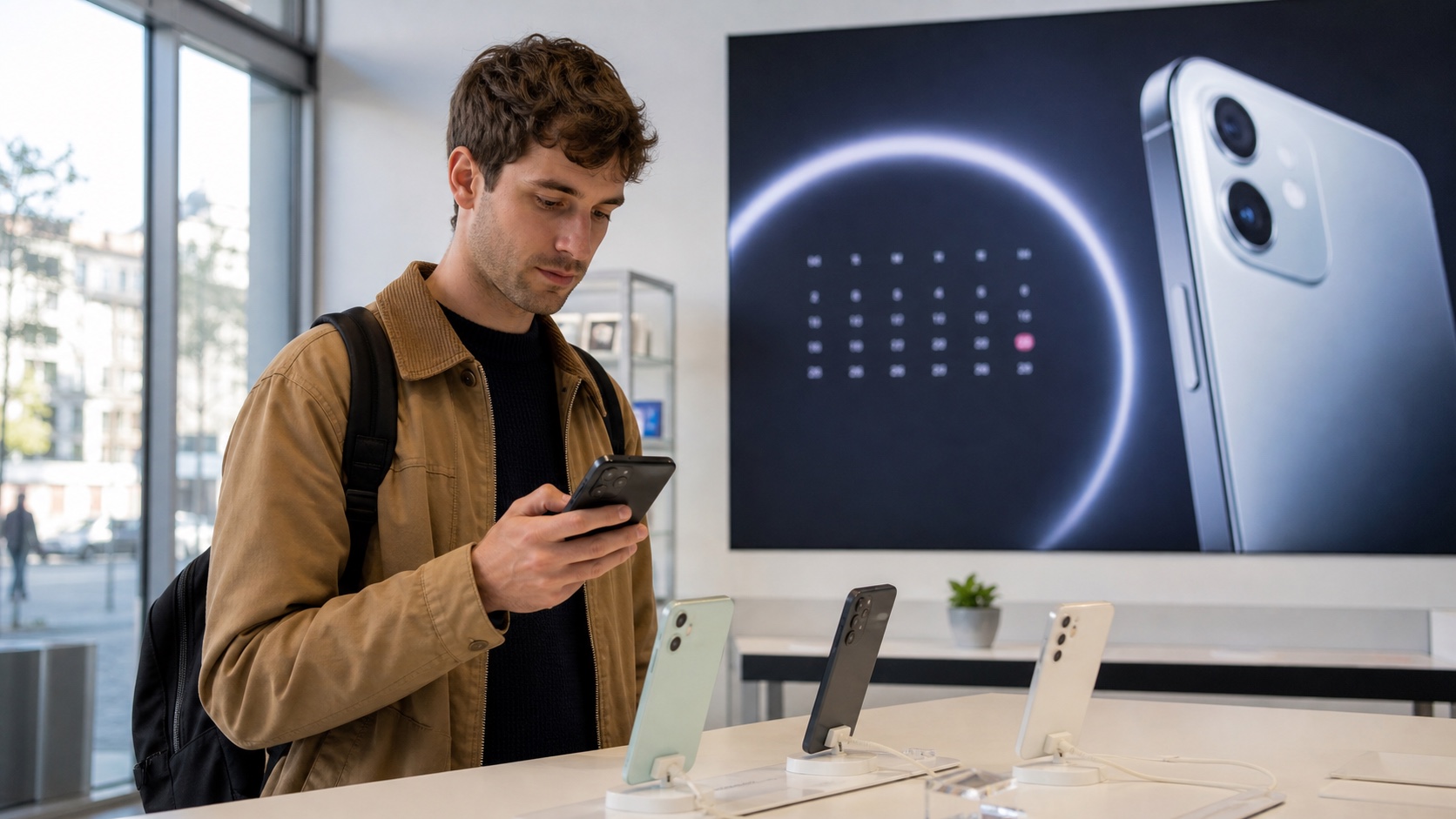
Google has set the next date in its mobile calendar. The Pixel 11 will be unveiled on August 12, 2026 at a Made by Google event broadcast from New York, with preorders opening that same day. For now, those are the main facts the company confirms on its official event page.
Opening orders immediately after the presentation creates a familiar dilemma: act quickly to secure a launch incentive, or wait for independent reviews of battery life, cameras and everyday reliability. Buyers can prepare for that decision now without turning leaks into specifications.
The short answer
| Question | What is known on August 5 |
|---|---|
| Is the Pixel 11 official? | Yes. Google names it on the event page. |
| When is the presentation? | August 12, 2026, at Made by Google in New York. |
| When do preorders begin? | August 12, following the announcement. |
| Is the French price confirmed? | Not on the announcement page reviewed for this article. |
| Are detailed specifications official? | Not yet. Buyers should wait for the presentation and product page. |
| Should everyone preorder immediately? | No. Check price, storage, trade-in terms and the return window first. |
That caution is not a prediction that the phone will disappoint. It simply separates three kinds of information: the official announcement, the specifications due on August 12, and real-world performance that only longer testing can establish.
What Google actually confirms
The Google Store page clearly displays the Google Pixel 11 name, the August 12 date and a live event from New York. It also invites visitors to register for preorder information. The schedule therefore comes directly from the manufacturer rather than a leak or an interpreted invitation.
The page is not yet a complete product sheet. It does not confirm a euro price, storage tiers, dimensions, battery capacity, camera hardware or the exact shape of the range. Even a credible leak can refer to a prototype, another market or a configuration that never reaches stores.
The useful approach is to keep a list of open questions and compare it with the French product pages published after the event. A US price should not be converted directly into a French price either, because taxes, configurations and promotions differ.
Seven details to check on August 12
Launch events naturally focus on visible new features. Less dramatic details matter more when a phone is expected to last for years.
- Price by storage tier. A competitive entry price matters less if the base capacity is restrictive or the next tier is disproportionately expensive.
- The battery claim and its test conditions. A phrase such as “more than 24 hours” depends on network, display settings and enabled features. Independent testing is still required.
- French connectivity. Check 4G and 5G bands, eSIM, Wi-Fi, Bluetooth and emergency features on the specification sheet for the model sold in France.
- The complete camera system. Megapixel counts do not describe moving subjects, low-light rendering or consistency between lenses.
- The update commitment. Google currently promises seven years of OS and security updates for Pixel 8 and later devices, measured from first availability in the US Google Store. The Pixel 11's own wording should still be checked.
- Repairability. Parts prices, service locations, turnaround times and out-of-warranty repair options affect the total cost of ownership.
- The boundaries of AI features. Buyers need to know which tasks run locally, which use cloud services, which languages are supported and whether any feature is tied to a subscription.
This checklist prevents a purchase being driven by a polished demonstration alone. A feature that looks impressive for thirty seconds may matter less than dependable reception, strong battery life or trouble-free use over five years.
Preorder or wait for reviews?
A preorder can make sense when an old device must be replaced immediately, the budget is already fixed and the return policy offers a genuine way out. It makes less sense when the purchase depends on a specific improvement in endurance, reception or photography, because those claims need real measurements.
Waiting one or two weeks usually brings comparisons, reveals early issues and clarifies differences between configurations. The cost may be the loss of a launch bonus. The right comparison is therefore between the bonus's real value and the risk of buying a device that has barely been evaluated.
A free accessory only saves its retail price if the buyer intended to purchase it. Extra storage, a direct discount or a well-defined trade-in can be easier to value. No promotion makes an unsuitable phone suitable for daily use.
Read the trade-in mechanism carefully
Google offers device trade-ins in France. The amount shown during checkout is an estimate; the final value depends on the declared model and the condition found after inspection. Google's help page says the estimate expires 30 days after the new phone is delivered.
If the final assessment is between 75% and 99.9% of the estimate, the customer has seven days to accept it. Below 75%, the old device is returned and no credit is issued. Those thresholds should be checked again in the terms displayed at purchase because conditions can change.
Before shipping a phone, take photographs from several angles, record its serial number, back up its data, remove activation locks and erase it only after verifying the backup. The new phone's net price should also be calculated without treating an uncertain estimate as guaranteed cash.
Updates and repairs define the seven-year cost
Google's seven-year policy for Pixel 8 and later devices changed how the range can be assessed. Long software support only helps when the hardware remains repairable and a worn battery can be replaced at a sensible price. Software and physical longevity need to be considered together.
Google documents both mail-in and walk-in repair options in France, but availability varies by model, fault and parts supply. Once the Pixel 11 is announced, buyers should look for it in the repair flow and inspect out-of-warranty pricing.
Dividing the net price by the planned years of ownership is often more useful than comparing sticker prices alone. A more expensive phone kept for five years can cost less than one replaced after two because of a weak battery, limited storage or ended support.
AI features need testing beyond the stage
Pixel devices have long served as a showcase for Google's AI services. Each launch demonstration should prompt practical questions: is the feature available in French, does it run on-device, does it require connectivity, are data sent to the cloud, and will it remain included without a subscription?
On-device processing can be faster and more private, but it can consume power or support fewer languages. A cloud feature can improve rapidly while depending on connectivity and service terms. Neither model is inherently wrong; the important point is to know which one applies.
Buyers should also identify which features ship on day one. Wording such as “coming soon” or “in selected countries” describes a future promise, not a capability available when the box is opened.
A checklist before pressing preorder
On August 12, a few minutes of verification can prevent an expensive mistake:
- open the official French page and identify the exact model reference;
- verify total price, storage and delivery estimate;
- read the launch offer conditions and expiry date;
- calculate the price with and without trade-in;
- confirm the update period for this specific phone;
- check the return window and any associated fees;
- find parts and repair options available in France;
- wait for reviews if battery, camera or reception will determine the purchase.
The Pixel 11 is now an announced product, but it is not yet an evaluated one. August 12 will bring prices and specifications; the days after it will bring measurements. Between the two, a buyer's best tool is a list of requirements written before the promotional countdown begins.
Join the discussion
Comments
Loading comments…