
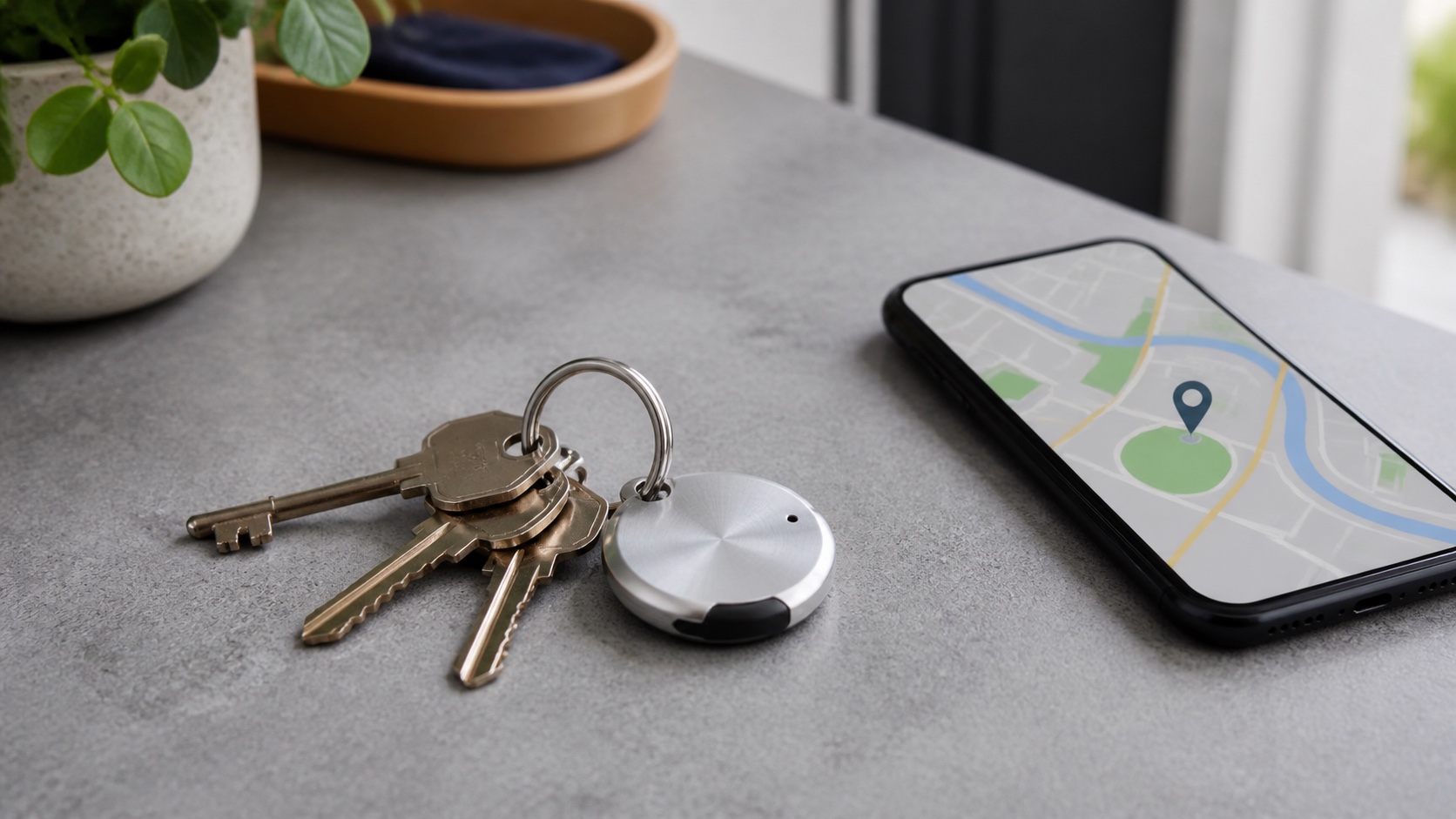
Google is entering the object-tracker market directly with Pixel Tag, a small accessory designed to locate keys, bags and luggage through Android's Find Hub network. Announced alongside the Pixel 11 family, it will cost $29 individually or $99 for a four-pack in the United States and is due later in 2026.
The idea is simple, but its operation is worth understanding before buying. A tracker is not a standalone GPS device transmitting from anywhere. It broadcasts a short-range signal that nearby Android devices can detect and relay securely to its owner.
The short answer
| Question | Answer |
|---|---|
| What is Pixel Tag for? | Locating a personal object through Google's Find Hub app. |
| When will it ship? | Google says later in 2026, without a complete international schedule yet. |
| How much does it cost? | $29 for one or $99 for four in the US. Other regional prices remain unconfirmed. |
| Does it require a Pixel phone? | No. Google says phones running Android 9 or later are compatible. |
| Does it contain GPS? | No. Its reported location depends on compatible devices detecting it nearby. |
| Can it track a person? | That is not a legitimate use. Android provides unknown-tracker alerts to detect unwanted tracking. |
The Android network is the real product
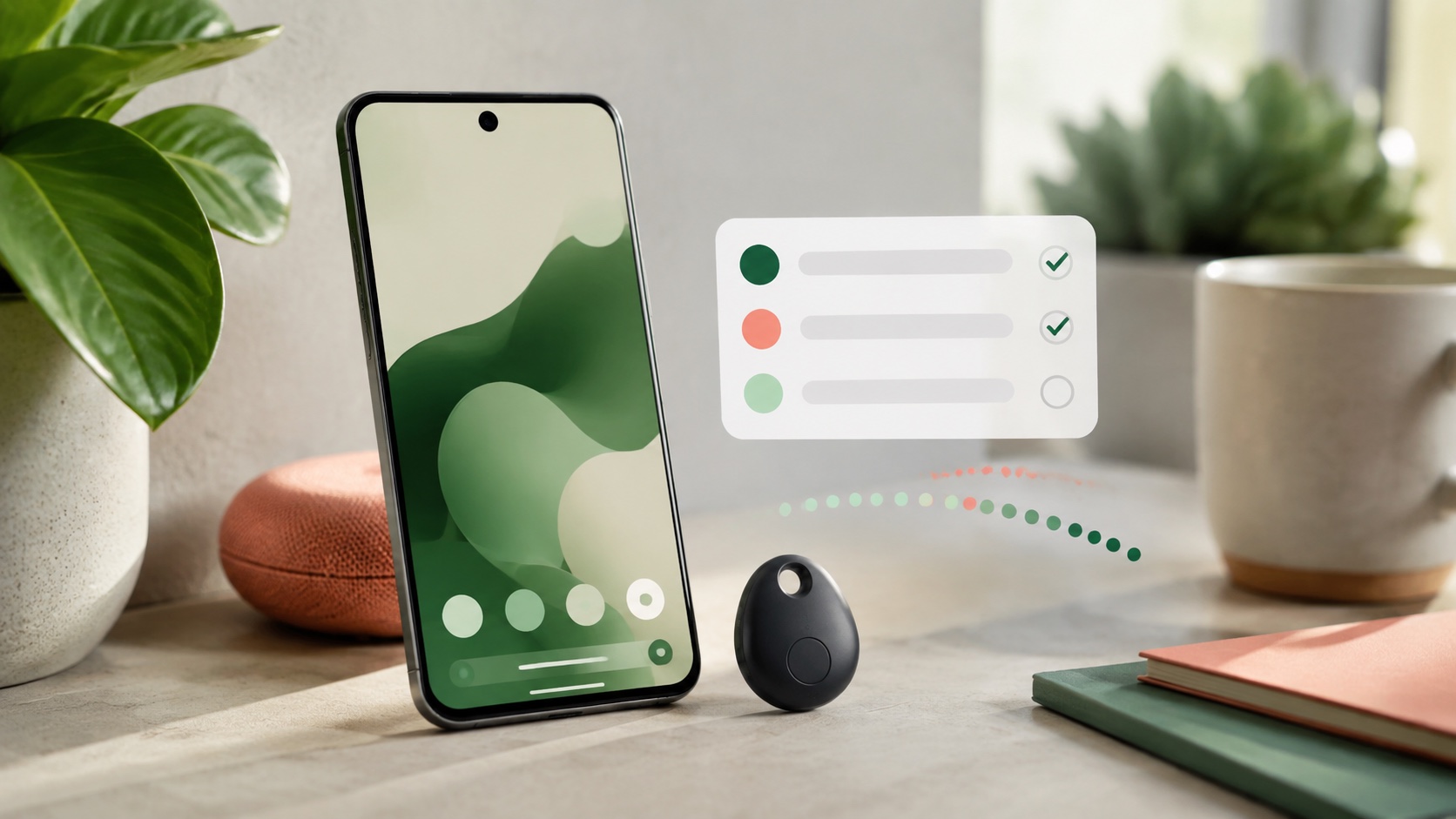
Pixel Tag relies on Find Hub, Google's location network. When a participating Android phone passes near the tracker, it can detect its Bluetooth signal and relay an encrypted location. The owner then sees that information in the app without learning who provided the detection.
Real-world usefulness therefore depends less on the tag's specification sheet than on the density of active Android devices around the missing object. A station, city center or airport may provide frequent detections. On a remote trail or inside a building with no compatible device nearby, the last location can remain stale.
This architecture also explains how a small tracker can operate for a long time without cellular service. It does not maintain its own permanent internet connection. Owners must still check the timestamp of the most recent detection before treating a point on the map as current.
A direct AirTag competitor
Google joins a market established by Apple's AirTag, Samsung's SmartTag family and Tile products. Shape and price are only part of the comparison. A tracker's value mainly comes from network size, nearby precision, sharing features and protections against abusive tracking.
Pixel Tag has an obvious advantage: it is not limited to Pixel phones. Compatibility with Android 9 and later gives it access to a much wider installed base. Independent testing will still be needed to measure detection frequency, final precision, battery life and performance outside dense urban areas.
Google describes a stainless-steel body designed to resist bending and cracking. That does not yet establish water resistance, battery replacement difficulty or attachment durability. Those practical details should be checked on final regional product pages.
What it can and cannot find
Keys are the obvious use case. A tag can also live in a backpack, suitcase or equipment pouch. Buyers should be more cautious with bicycles, cars and pets: the network may provide a useful location, but it does not replace a lock, a connected GPS system or a device designed for animal safety.
Checked luggage illustrates the distinction. Pixel Tag might show that a suitcase remains near a terminal, but it cannot grant access to restricted areas or replace an airline's lost-baggage process. Its location is supporting information for a search, not a recovery guarantee.
Find Hub already locates phones and compatible accessories. Pixel Tag gives Google a reference product that can be integrated more tightly into Android, from initial pairing to sharing an item with another person.
Privacy and unwanted-tracking alerts
A crowdsourced network can only be acceptable if location data is protected. Google says locations relayed through Find Hub are encrypted and that the network uses safeguards preventing participants from identifying the owner or the object they detected.
The most visible risk is using a tracker to follow someone without consent. Android can warn users when an unknown tracker appears to be moving with them. The alert is intended to help locate the accessory, make it play a sound, display relevant information and provide steps for disabling it.
Google and Apple have worked on a shared unwanted-tracking alert specification. The principle matters: protection should not become weaker merely because the tracker and the potential victim's phone belong to different ecosystems. Alert timing and the final disabling process will need testing on shipping hardware.
What buyers should verify
Google has not published every regional launch detail. International pricing, exact availability, included accessories and four-pack distribution remain to be confirmed. Buyers should also check battery type, stated endurance, dust and water resistance, and whether the built-in speaker is loud enough in a busy environment.
Short-range precision is another deciding factor. A map can lead to a building or room, but finding something underneath a sofa requires useful directional or audible guidance. Google has not yet provided enough public detail to compare this final step with precision finding offered by some competitors.
Android 9 compatibility also does not mean every feature will behave identically on every handset. Google Play services, Bluetooth hardware, location settings and network participation can all affect the experience.
Is Pixel Tag worth waiting for?
For Android users who do not urgently need a tracker, Pixel Tag is worth considering once local launch terms are available. Native Find Hub integration and broad compatibility may produce a cleaner experience than accessories dependent on a separate app.
People with an immediate need already have alternatives compatible with Google's network. A first-party logo alone does not guarantee better reach or endurance. Price, physical format, battery, resistance and field results still need comparison.
Pixel Tag mainly confirms a broader shift: Google now treats object finding as a core part of the Android ecosystem. Its success will depend on whether it can locate belongings quickly while protecting people who never agreed to be tracked.
Join the discussion
Comments
Loading comments…