
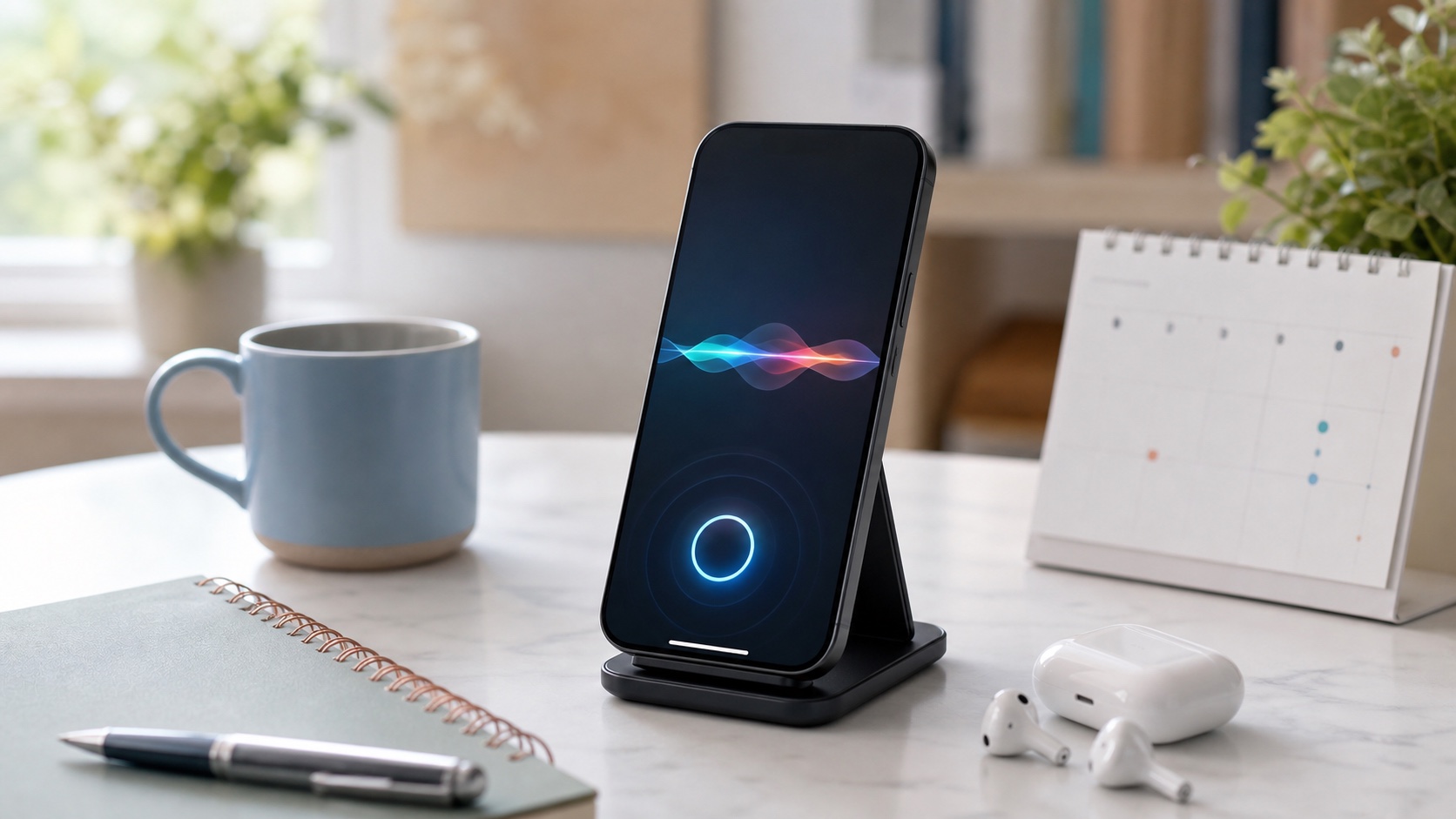
The new version of Siri is entering the phase that really matters: ordinary users. With the iOS 27 public beta, Apple is expanding access to its AI-rebuilt assistant. For a product like Siri, this is more important than a conference demo. A voice assistant is not judged on stage. It is judged in the kitchen, in the car, at work, with background noise, vague requests and existing habits.
This is a mainstream story because it touches a device hundreds of millions of people use every day. Since ChatGPT, Gemini and Claude entered common use, phone assistants have often felt behind. They could set a timer, call a contact or start a playlist, but rarely felt capable of understanding complex context. Apple is trying to fix that perception without turning the iPhone into a visible lab experiment.
The challenge is therefore twofold: make Siri more useful while preserving what makes Apple strong for mainstream users, namely an integrated, predictable and relatively reassuring experience.
The real challenge is context
An AI assistant on a smartphone does not have the same role as a chatbot in a browser tab. It has to operate inside the user's personal environment: messages, calendar, photos, reminders, apps, preferences and immediate history. That context is what can make Siri genuinely better. Asking "send him the document from this morning" or "find the receipt photo and file it" only has value if the assistant understands who "him" is, what "this morning" means and where the information lives.
That promise is also the sensitive point. The more personal the assistant becomes, the more trust it needs. Users will not accept a highly capable assistant if they feel it is roaming everywhere without control. Apple therefore needs to explain clearly what stays local, what goes to servers, which data is used and how users can take back control.
Apple's messaging around Apple Intelligence has emphasized system integration and privacy from the start. But the public beta will test something else: user tolerance for mistakes. A personal assistant can be wrong in a more awkward way than a search engine. A bad answer is one thing. A bad action is another.
Why Europe is watching closely
For French and European users, actual availability remains important to watch. Apple's AI features have often rolled out carefully depending on regions, languages and regulatory constraints. That can frustrate users, but it is also consistent with the nature of the product. An assistant integrated into the operating system does not ship like a simple app.
Europe adds several constraints: multiple languages, competition rules, data protection requirements and strong expectations around interoperability. If Siri AI arrives later or with some limits, the question will not only be technical. It will also be regulatory and product-driven.
For Apple, the risk is obvious. If US users test a much more capable Siri while other markets wait, the perception gap can grow. At the same time, a rushed launch with incomplete French features would probably do more damage than an explicit delay.
What this changes for apps
A more capable Siri can also change the relationship between users and apps. If the assistant can act across multiple apps, classic interfaces do not disappear, but some short tasks can be absorbed by natural commands. Booking, summarizing, moving, replying, filing, comparing: these are actions that can flow through an orchestration layer.
Developers will therefore need to think of apps as action surfaces, not only screens. Shortcuts, intents, permissions and feature descriptions become strategic. An app invisible to the assistant risks becoming less convenient than a less polished app that is better connected to the system.
This shift will not happen overnight. Users will continue to open apps. But the assistant can capture moments where the user wants a result without navigating an interface.
The trust question
The hardest part for Apple may be choosing the right level of ambition. A Siri that is too cautious will feel disappointing next to modern chatbots. A Siri that is too autonomous may feel worrying. The right product will explain what it is about to do, ask for confirmation when an action is sensitive and fail cleanly when it is unsure.
This is where Apple's approach can become an advantage again. The company controls hardware, the operating system, native apps and much of the user experience. It can therefore offer AI that is less spectacular but better bounded. The open question is whether users will wait for that coherence while competitors move quickly.
The iOS 27 public beta is not the final verdict. It is the moment where the promise meets ordinary use. For Siri, this is probably the most important test since its original launch: not just answering, but helping for real without becoming intrusive.

Join the discussion
Comments
Loading comments…