
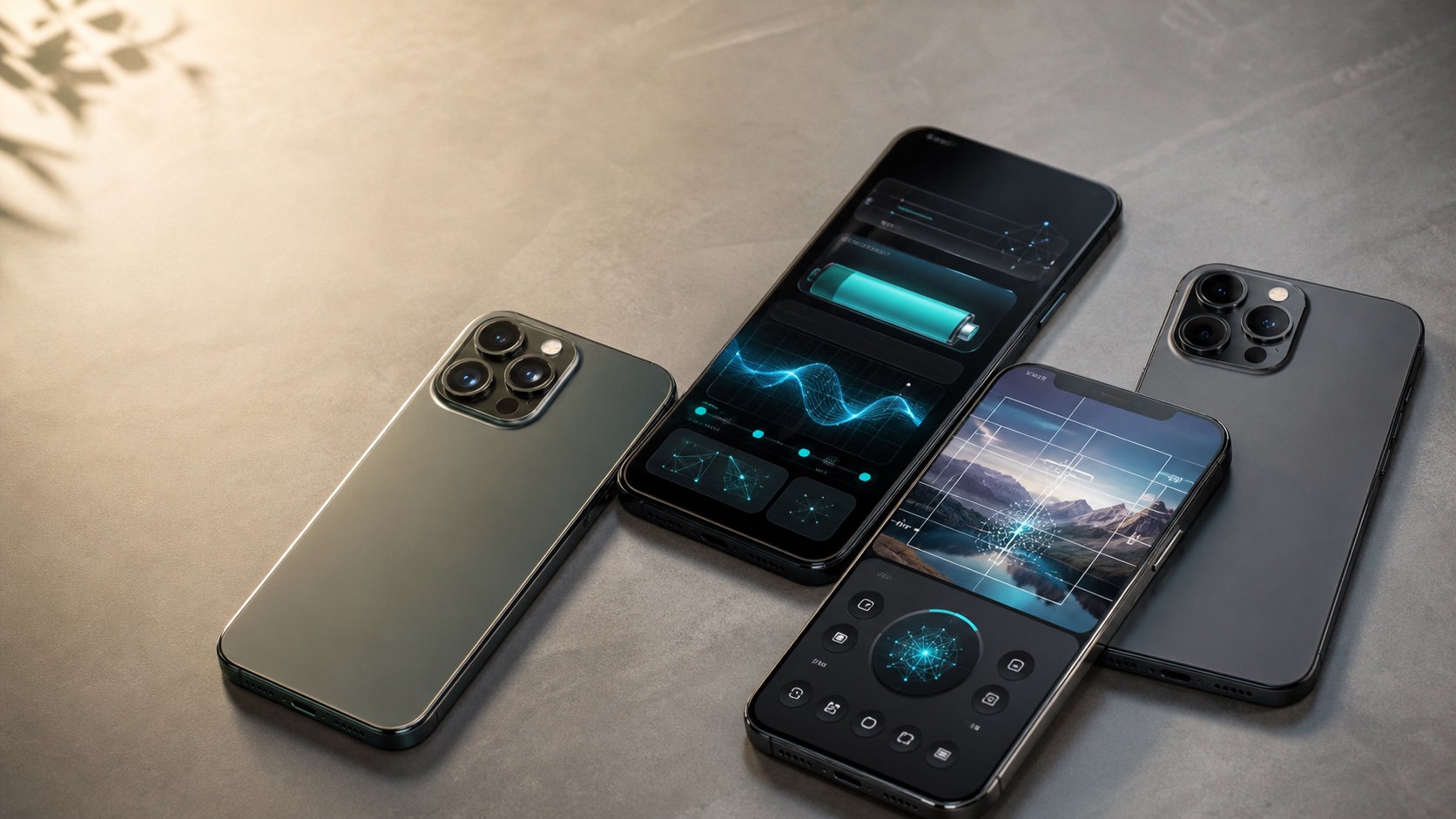
In 2026, almost every smartphone promises AI. Brands talk about intelligent photo editing, live translation, assistants that understand what is on screen, note summaries, image search and software-powered privacy features. For buyers, the question is no longer whether a phone has AI. It is whether that AI actually helps in daily life.
Buying guides from 01net, Frandroid and Les Numériques point to a clear trend: the best smartphones do not win only because of AI features. They win because they combine display quality, battery life, cameras, performance, software support and ergonomics. AI is an extra layer, not an excuse to neglect the basics.
Do not start with AI
The first trap is buying a phone because an AI demo looks spectacular. Object removal in photos, automatic summaries or live translation can be impressive. But a smartphone is still a device you use all day. If it overheats, charges slowly, takes poor night photos or stops receiving updates too soon, the wow effect fades quickly.
Start with your uses. If you take lots of photos, look at camera versatility, low-light processing, zoom and shutter speed. If you travel, focus on battery life, charging, eSIM support, screen brightness and offline translation. If you keep phones for years, software update duration matters most.
AI becomes valuable when it strengthens an existing need. It is much less useful when it adds a menu you will open twice.
Buyer profiles
For photography, flagship models remain the safest choices. Samsung Galaxy Ultra, Google Pixel Pro and iPhone Pro Max devices often dominate comparisons because they combine ambitious hardware and mature software processing. AI can improve HDR, stabilize video, correct blur or organize a gallery, but it does not replace a good sensor, decent optics and coherent processing.
For battery life, some Android brands have an advantage thanks to large batteries and aggressive optimization. This matters more than it seems. Local AI assistants, voice transcription or advanced photo processing consume energy. An "AI phone" that reaches the evening at 10% will mainly make you disable the interesting features.
For value, the mid-range segment remains the one to watch. Models around 300 to 600 euros are improving quickly on screens, battery life and update commitments. They do not always offer the most advanced AI features, but they often cover real needs: smooth performance, decent daylight photos, navigation, messaging, video and security.
For AI enthusiasts, Pixels remain interesting because Google integrates its own features quickly. Samsung is also pushing Galaxy AI strongly on recent devices. Apple moves more gradually through ecosystem integration. The right choice therefore also depends on your services: Google Photos, iCloud, Samsung apps, Microsoft tools or professional workflows.
Specs that matter
The chip matters, but not alone. A recent processor helps with local AI, computational photography and gaming. You should also look at RAM, thermal management and software optimization. A powerful phone that throttles after a few minutes is not pleasant over time.
The display remains central. A bright, well-calibrated screen that stays readable outdoors changes the experience more than many marketing features. If you read, watch videos, play games or use GPS, screen quality matters as much as AI.
Support duration has become a major criterion. A modern smartphone contains sensitive data, payment methods, private photos and sometimes professional access. Six or seven years of updates can justify a higher price, especially if you keep the device for a long time.
Privacy also deserves attention. Some AI functions run locally, while others send data to the cloud. Settings, retention policies and opt-out options should factor into your choice if you handle sensitive documents, private photos or work conversations.
AI features that are actually useful
Live translation can genuinely help while traveling or in multilingual work. Call or meeting transcription is useful if it is reliable and if consent rules are respected. Search inside photos helps you find a document, license plate, location or object.
Automatic photo editing is convenient, but it should remain visible as editing. For personal memories, fine. For proof, sales listings, documents or anything factual, keep the original.
Assistants that understand what is on screen are promising. They can turn an address into directions, extract a date, summarize a page or suggest an action. But they also raise the biggest privacy questions because they require a detailed reading of your context.
Mistakes to avoid
Do not pay only for a future promise. Many AI features arrive after launch, sometimes only in specific countries or languages. Check what is available now in France, on the exact model you are buying.
Do not confuse cloud storage with AI. The most comfortable features sometimes require an account, a subscription, synchronization or remote processing. That may be acceptable, but it should be part of the real cost.
Do not ignore repairability. Battery, screen, USB-C port and parts availability matter. An expensive smartphone with several years of software updates must also physically survive several years.
A simple method
Before buying, write down your top three priorities: camera, battery, gaming, compact size, price, updates, privacy or ecosystem. Then compare no more than three models in your budget. Read at least two reviews, not just a retail spec sheet. Check the release date, promised updates and AI features that are actually available.
The best AI smartphone of 2026 is not necessarily the one with the most impressive demo. It is the one that makes your daily uses simpler, faster or more reliable without sacrificing battery life, photography, security and lifespan.


Join the discussion
Comments
Loading comments…