
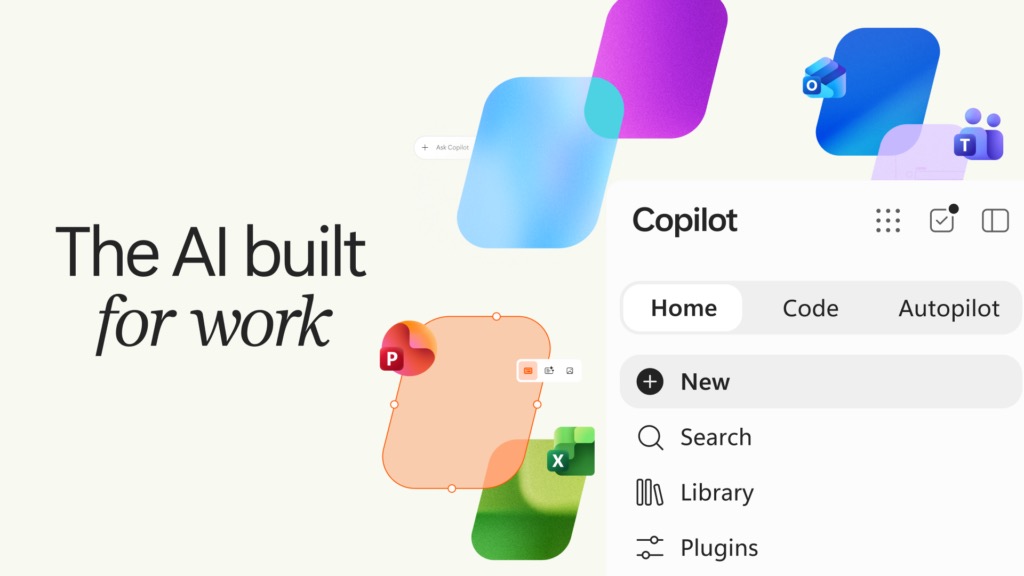
Microsoft is rebuilding Copilot around three modes: Home for resuming and producing work, Code for creating internal tools, and Autopilot for delegated tasks that continue without waiting for another prompt.
The short answer
| Question | Answer |
|---|---|
| Does Home replace Office? | No. Word, Excel and PowerPoint are embedded and their files remain editable. |
| Is Code only for developers? | No. Microsoft presents it as a natural-language tool builder. |
| Is Autopilot available? | It is expanding through private preview while Home and Code begin in the Frontier program. |
Home connects conversation to the deliverable
Home brings Chat and Cowork together, but the more important change is direct Office document editing. A request can produce a Word document, workbook or presentation that the team keeps editing. This avoids frozen outputs created beside the real work: context, versions and collaboration stay in the tools the organization already uses.
Code targets small business software
A user describes a dashboard, tracker or automation, and Copilot selects an approach inside a sandboxed environment. The managed runtime remains governed by the organization. Ease of creation does not remove ownership, lifecycle and data-quality questions: an app assembled in minutes can become operationally important within weeks.
Autopilot works over time
The agent has an identity, memory, computer, workspace and permissions inside the tenant. It can monitor channels, follow up with participants and resume a process days later. Persistence makes auditability and action boundaries essential: objectives, allowed sources, budget and stopping conditions need to be explicit.
Cost becomes an architecture decision
Everyday assistance remains covered by a user subscription, while Cowork, Code, Autopilot and frontier models use consumption billing. Microsoft is adding FinOps controls, policies and credit requests accordingly. Before broad rollout, an organization should measure value by business process rather than only prompts or active users.


Join the discussion
Comments
Loading comments…