
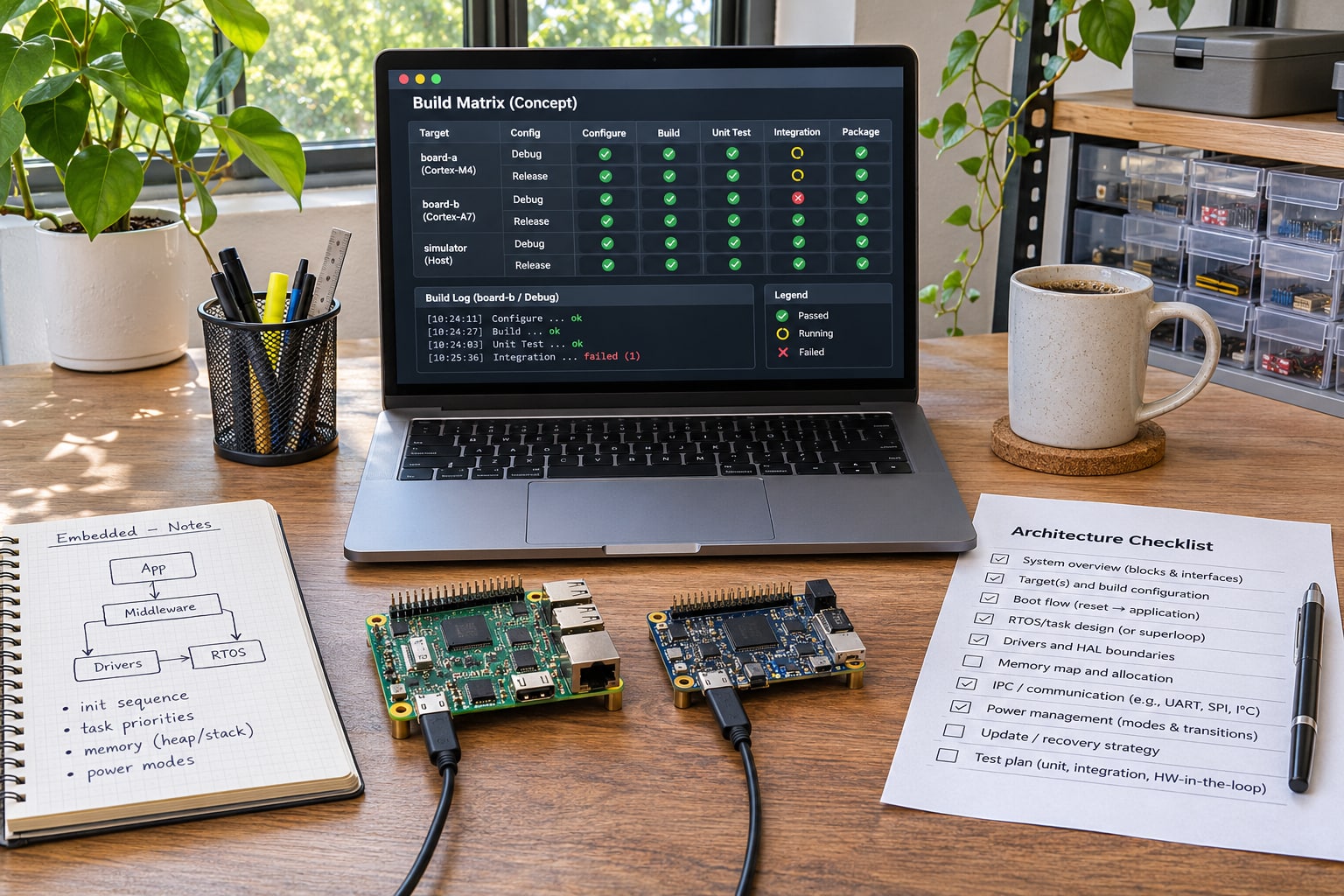
A binary intended for an older device does not, by itself, determine the architecture of its build machine. GitHub says ARM32 execution on hosted Windows and Linux runners will end by December 8, 2026. Affected teams need an inventory before changing runner labels.
The November 12 announcement connects this retirement with the transition from Node 20 to Node 24, which does not support ARM32. It includes native AArch32 user-space execution on hosted runners.
Separate three architectures
Our recommendation is to record runner architecture, the runtime executing an action and the resulting artifact's target separately.
Cross-compilation may produce ARM32 software on a different architecture, but that does not prove the tests run it in a representative environment. Equally, an ARM filename is not evidence that the entire workflow is affected.
Inspect actual execution
Review job matrices, downloaded scripts, images and native tools used by actions. Assign an owner and a verification method to each relevant stage.
Keep a successful baseline before making changes: observed architecture, tool version and resulting artifact. It helps separate migration regressions from existing failures.
Do not interpret the announcement's hosted-runner scope as a support guarantee for your own self-hosted environment. Its operating system, agent and executed components require their own checks.
Validate artifacts, not just green jobs
Prepare an isolated trial with a representative workload. Check the output format and run the relevant tests on an appropriate target.
A green job may only show that compilation finished. Record what was not tested, such as unavailable hardware, missing drivers or excluded scenarios. An explicit limitation is more useful than assumed equivalence.
Compare the new artifact with the acceptance criteria your deployment already uses. Avoid introducing an undocumented exception simply to get the migration through.
Assign the transition
We recommend an owner and a validation date for every affected workflow before the deadline. Keep changes focused: changing compilers, dependencies and deployment logic together makes failures harder to diagnose.
This complements our Node 20 retirement article. The objective is a reproducible build chain with clearly defined tests, not merely a different architecture name in YAML.
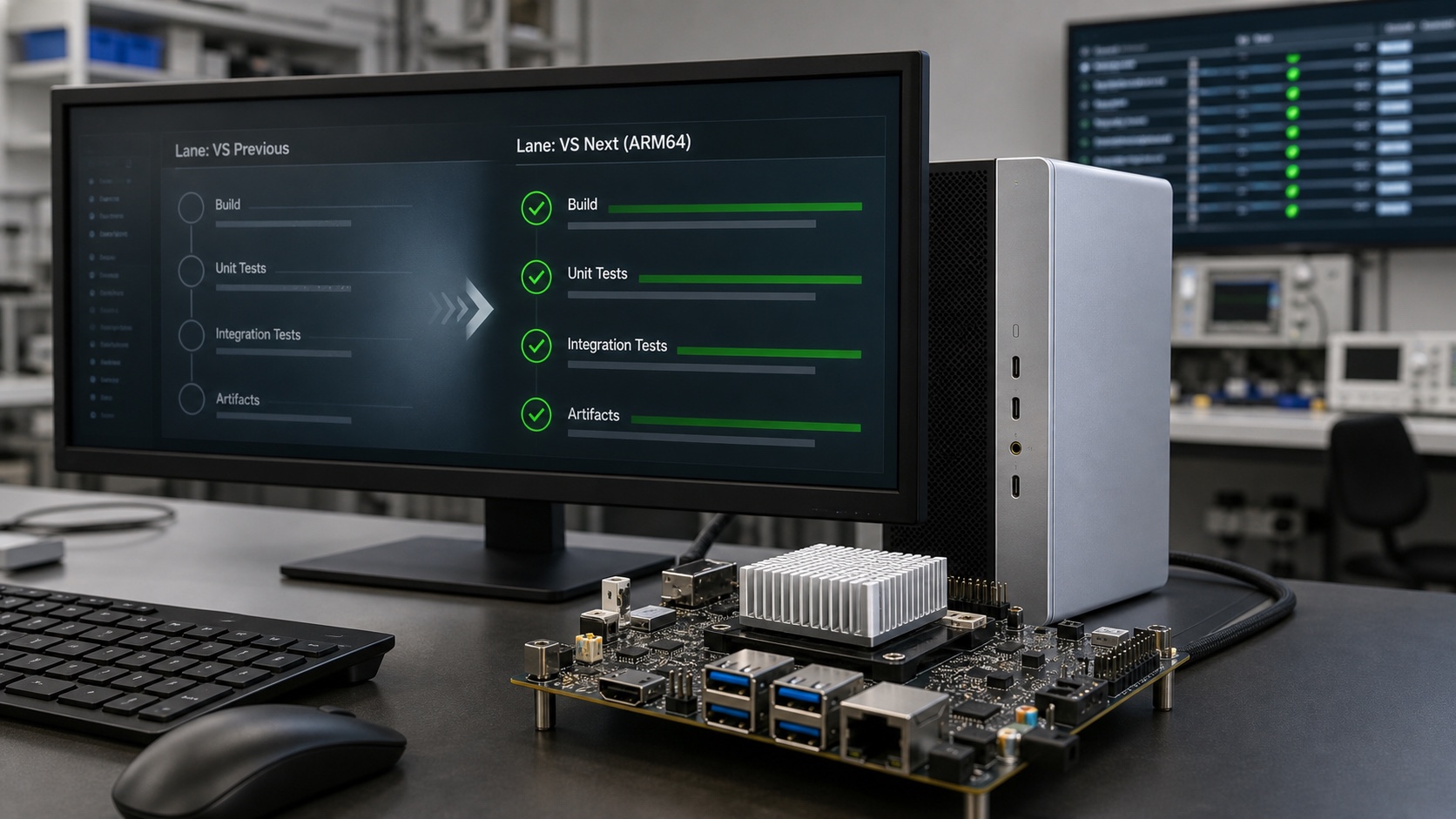
Visual: generated editorial illustration, not an official screenshot.

Join the discussion
Comments
Loading comments…