
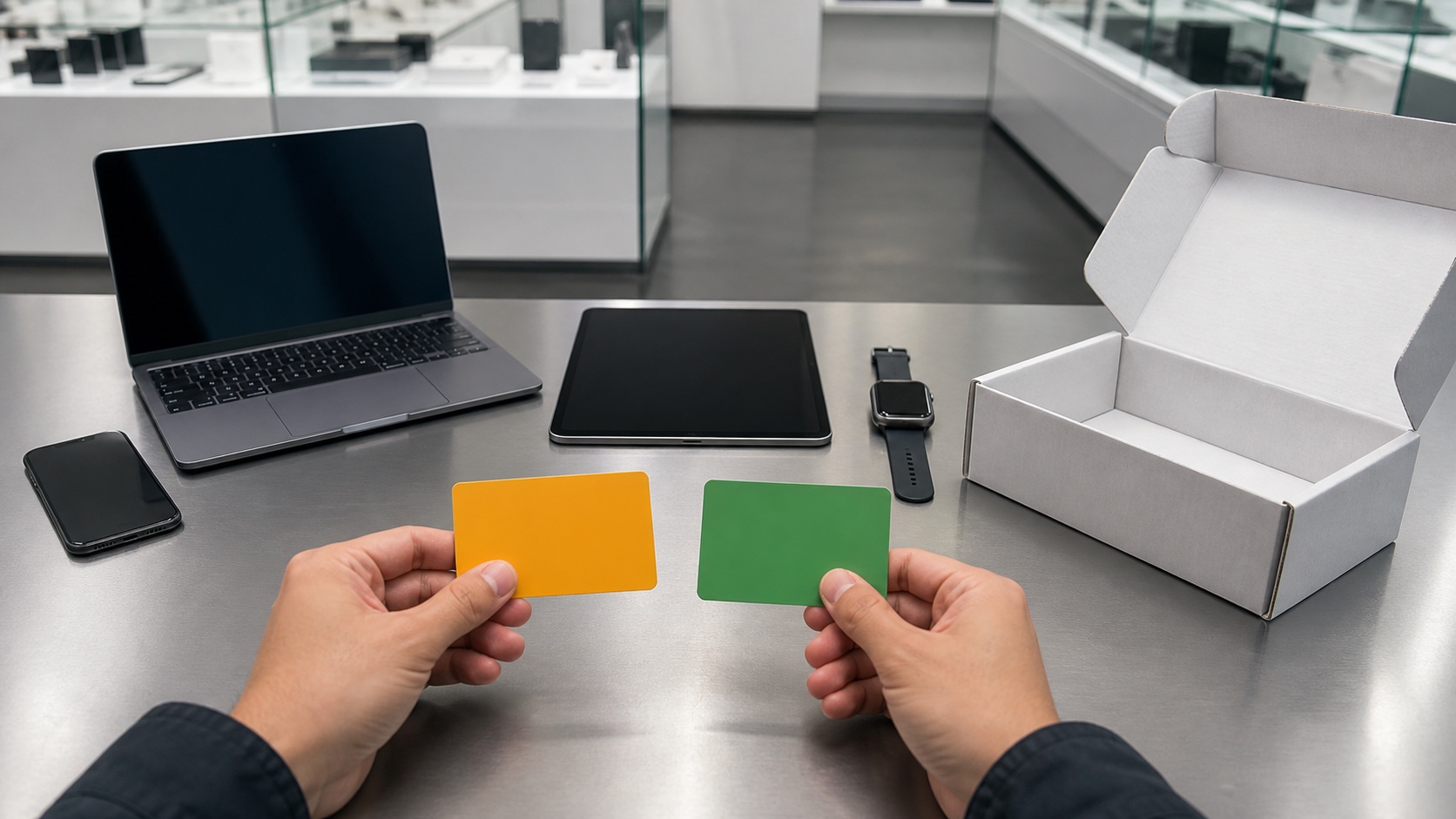
Apple has launched Apple Upgrade in the United States, a Klarna-provided lease for iPhone, Apple Watch, iPad and Mac. Customers choose a term, pay monthly and then return the device for a newer lease, buy it with a final payment or leave the program. Advertised starting prices are $17.99 a month for iPhone, $11.99 for Apple Watch and iPad, and $24.99 for Mac.
The low monthly figure attracts attention, but it is neither the total price nor necessarily the lowest cost. Apple Upgrade turns the purchase of a resalable device into a right to use it under rules for term length, return condition and early exit.
The short answer
| Question | Answer |
|---|---|
| Is Apple Upgrade available outside the US? | No. Apple has announced a US launch without an international schedule. |
| Do customers own the device during the lease? | No. It must be returned, bought out or replaced under the agreement. |
| Which terms are offered? | 12 or 24 months for iPhone and Watch; 24 or 36 for iPad and Mac. |
| Can customers upgrade early? | In some cases, with an early-upgrade fee. |
| Is it always cheaper than buying? | No. Total payments, resale value and possible fees must be compared. |
One program across four device families
Apple Upgrade expands a concept once centered on iPhone. A user can lease a phone or watch for twelve or twenty-four months, and an iPad or Mac for twenty-four or thirty-six. Klarna provides the lease and determines eligibility.
An owned device can be traded in at enrollment to lower payments on the first term. That is not a permanent discount: the trade-in value is consumed in the initial calculation and does not automatically repeat on the next lease.
For iPhone, Apple requires an eligible US carrier and excludes prepaid plans, although the leased phone remains unlocked. Those details illustrate why US advertised prices cannot simply be transferred to another market.
What happens at the end?
After scheduled payments, customers can request a new device and return the old one in good condition. They then sign a new lease whose payment may be higher. They can instead pay the stated purchase amount or return the product and stop.
Doing nothing costs money. Apple's terms say the lease may continue month to month for up to six months, potentially at a higher payment. A purchase fee can be charged after that extension.
Early upgrades may carry a fee. Failure to return the previous device on time can leave a customer paying old and new leases together. Reminders and the return kit are financial details, not merely logistics.
Calculate more than the monthly figure
Add every payment, any upfront amount, AppleCare, taxes, exit fees and the trade-in value surrendered. Compare that total with cash or financed purchase cost minus estimated resale value after two or three years.
A well-kept iPhone often retains meaningful value. Under a lease, that value returns to the program owner unless already reflected in lower payments. The service can be rational for someone who upgrades consistently and never wants to resell. It is less obvious for a person who keeps a Mac for five years.
Condition risk matters too. Apple presents AppleCare as making returns easier, a reminder that damage or wear outside the criteria may cost extra. The Klarna lease agreement matters more than the headline.
Why Apple wants leasing
Leasing makes revenue recurring, encourages upgrades and returns hardware into Apple's channel. Returned products can support refurbishment or recycling. Customers gain predictable budgets and access to current hardware with less upfront cash.
The downside is an endless hardware subscription. A customer who renews every term pays continuously without building ownership of a device they can keep or sell. Convenience can hide a higher cumulative expense.
Could it expand internationally?
Apple has provided no schedule beyond the United States. An international version would need to comply with local credit and leasing rules, disclose total cost and secure financial partners. Many markets already have carrier and retailer leasing, so Apple may see value in controlling that experience directly.
Until then, US prices should not be used in foreign comparisons. Tax, finance, consumer protection, carrier requirements and trade-in values differ. The announcement still sends a broad signal: Apple wants to organize the entire replacement cycle, not only sell the next device.
Apple Upgrade buys convenience with the device's residual value. It may suit frequent upgraders; for everyone else, buying, keeping and later reselling remains the benchmark it must beat.
Join the discussion
Comments
Loading comments…