
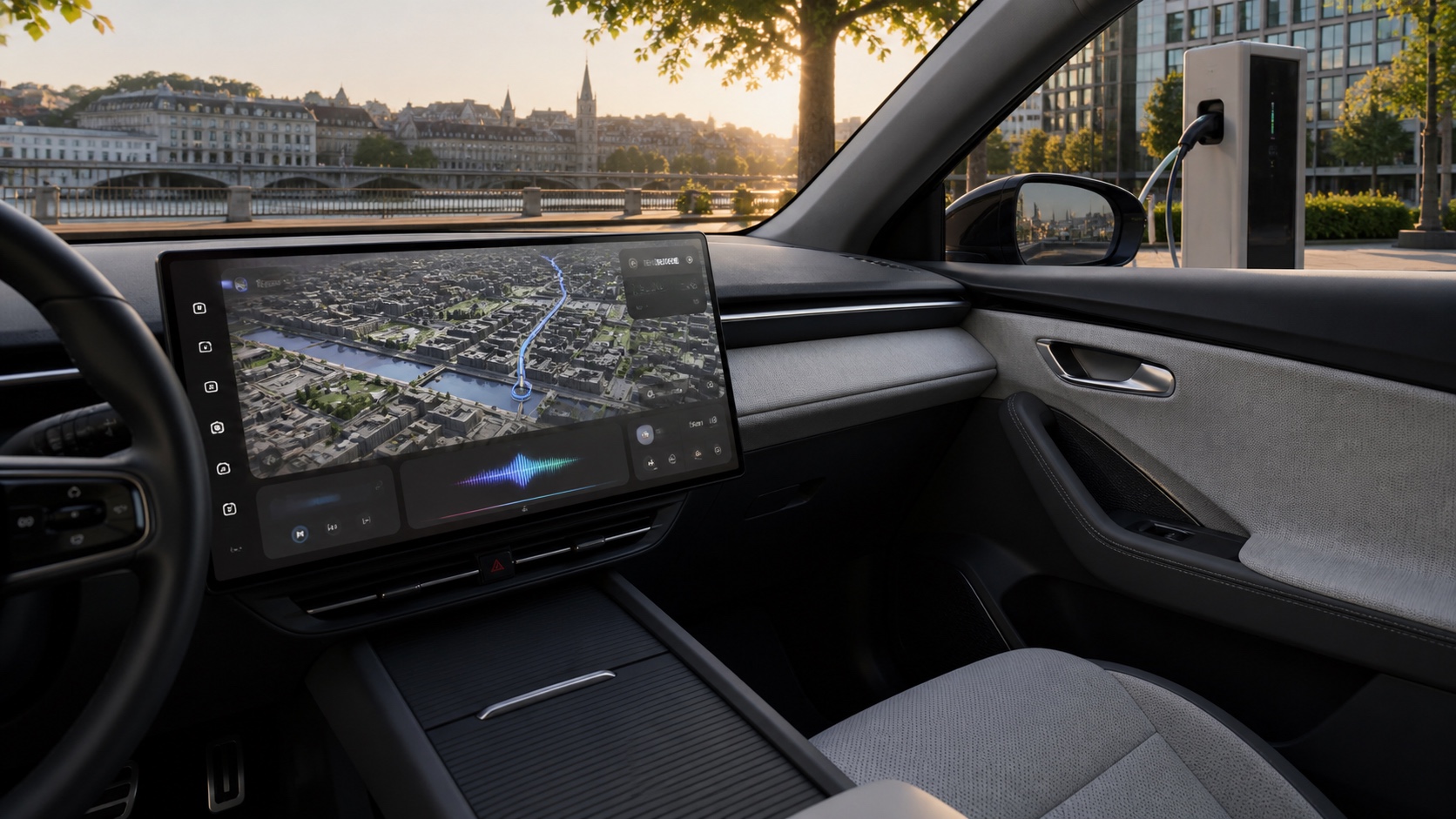
Google is preparing Android Auto's biggest visual change in years. The next interface adopts Material 3 Expressive, adds widgets, stretches Google Maps to the edges and introduces more detailed 3D navigation. Compatible cars will also play Full HD video while parked, then switch to audio when the driver moves away.
Gemini is the other half of the announcement. The assistant already responds by voice in Android Auto; with Gemini Intelligence, Google wants it to use context from messages, calendars and the vehicle to suggest actions. That can help, but the cabin sets a special requirement: a convenient phone feature must not become a distraction at motorway speed.
The short answer
| Question | Answer |
|---|---|
| What changes visually? | Material 3, widgets and edge-to-edge Maps adapted to different displays. |
| Does video work while driving? | No. Google limits it to parked cars and switches supported apps to audio when moving. |
| What does Gemini add? | Voice answers, personal context and suggested tasks with confirmation. |
| Will every car support it? | No. Features depend on vehicle, display, phone, country and app. |
| When does it arrive? | Google describes a progressive rollout through the year. |
An interface for very different displays
Car screens range from small horizontal rectangles to tall or ultrawide panels. Google promises a layout that adapts to those shapes, with glanceable elements and a map using available space. Widgets can show a favorite contact, weather or smart-home shortcut during navigation.
That density needs restraint. More information does not automatically improve driving. Manufacturers must preserve large touch targets, readable contrast and animations that do not unnecessarily pull the driver's gaze.
Google Maps becomes immersive
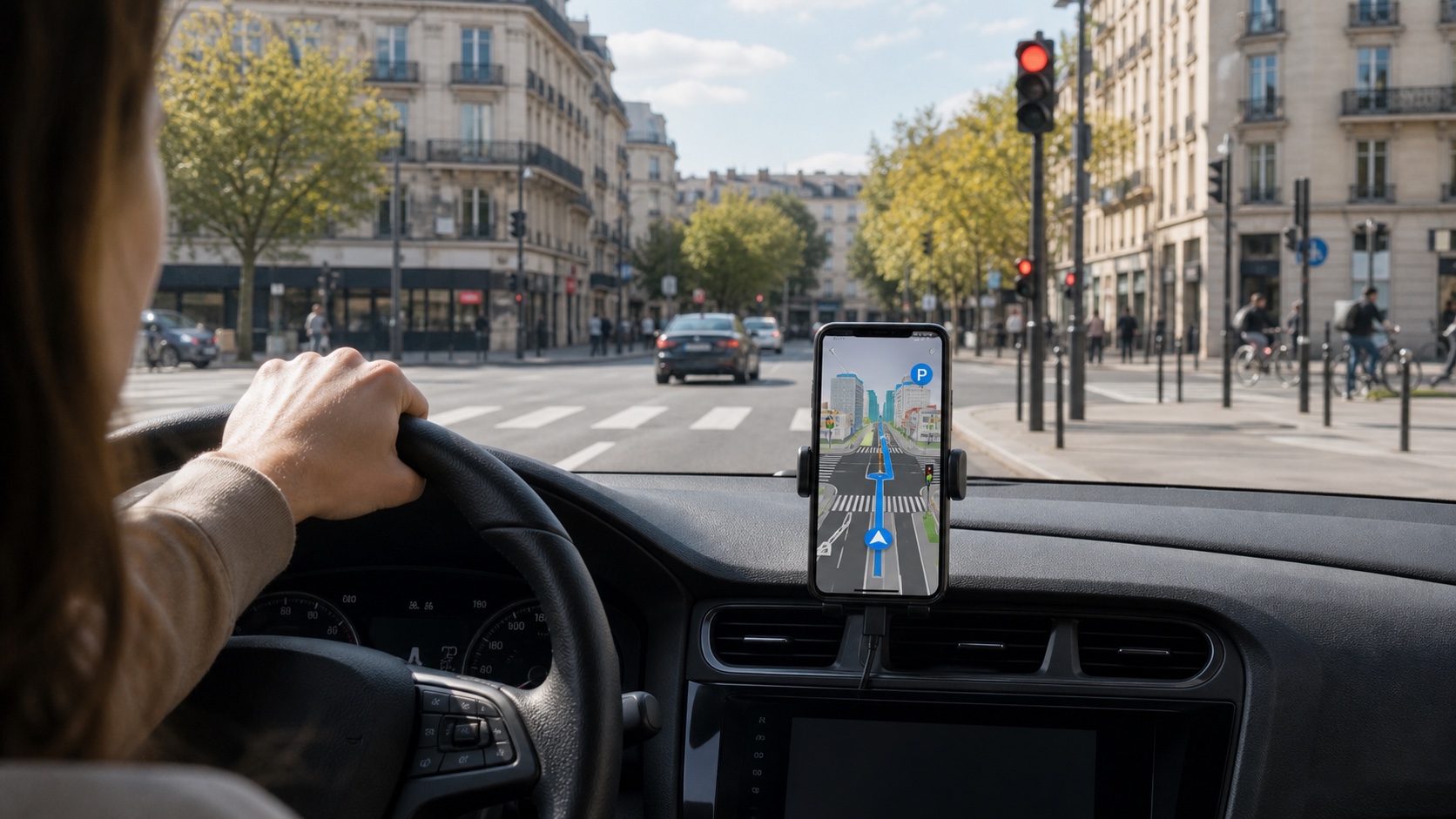
Immersive Navigation renders buildings, interchanges and terrain in three dimensions. It highlights lanes, traffic lights and stop signs to clarify difficult junctions. In some cars with Google built-in, the front camera can identify the current lane and refine guidance.
A 3D view helps when it reduces the mental translation between map and road. It hurts when it hides the next instruction or overloads older hardware. Testing should compare sunlight, night driving and smaller screens.
The car becomes a video screen only while parked
YouTube and other apps will stream at 1080p and 60 frames per second on supported cars. Google names BMW, Ford, Hyundai, Kia, Mercedes-Benz, Renault, Škoda and Volvo among early brands. When the transmission leaves park, a compatible app can continue as audio only.
The restriction is essential. The platform must rely on trustworthy vehicle state and resist accessories intended to bypass it. Video mainly serves breaks and EV charging sessions, where the center display can replace a handheld phone.
Gemini uses more context
Google describes receiving a message asking for an address. Magic Cue can find the answer in messages, email or calendar and offer a one-tap response. Gemini can also prepare a food order with user confirmation.
This integration removes interactions, but the display must remain sparse. One correct, short suggestion may reduce distraction; a conversation requiring several corrections can increase it. Payments, addresses and recipients need explicit confirmation.
In cars with Google built-in, Gemini can reach vehicle-specific information. It may explain a dashboard light or estimate whether an object fits in the trunk. Such answers are assistance, never a replacement for the manual or mechanical diagnosis.
Android Auto and Google built-in differ
Android Auto mainly projects the phone experience. Google built-in is part of the car system and can integrate more deeply with sensors and controls. A feature announced for one does not automatically reach the other.
Before buying a car for one feature, check the exact model, year, country and manufacturer's schedule. “Android Auto compatible” does not guarantee video, immersive navigation or Gemini Intelligence.
What to watch during rollout
Performance on older hardware, data use, language support and controls for personal context will be decisive. A shared car needs clean account sign-out and must not expose the previous driver's messages.
Google reports more than 250 million Android Auto-compatible cars and over 100 Google built-in models from 16 brands. A consistent interface can matter at that scale. Success will still be measured by how long drivers can keep their eyes on the road.
The best Android Auto is not the one showing the most features, but the one demanding the least attention. This redesign is ambitious; its widgets, 3D maps and agents must prove they respect that rule.
Join the discussion
Comments
Loading comments…