

Wero has just crossed an important threshold in Germany: the European payment method is now available at Decathlon on decathlon.de and in Lidl's online shop. On the surface, that looks like one more checkout option. In practice, it is more meaningful. Wero is leaving the banking conversation and appearing inside shopping journeys that millions of people already understand.
That is exactly the kind of step a payment product needs if it wants to become visible. Peer-to-peer transfers can build an initial user base, but the real habit is often created at checkout: buying a fitness bike, shoes, an entry-level phone or household supplies, then approving the payment in seconds from a familiar banking app.
Decathlon says it activated Wero on its German website on July 20, 2026, with Germany as the first Decathlon market to integrate the solution. Lidl has made a similar announcement for its German online shop. The shared message is clear: Wero is no longer only a European payments ambition. It is becoming a button that users can meet at a known retailer.
Why this is a mainstream story
Payments are technical, but adoption is not. People do not change habits because an infrastructure is elegant. They change when the service appears in the right place, at the right time, with less friction than the alternative.
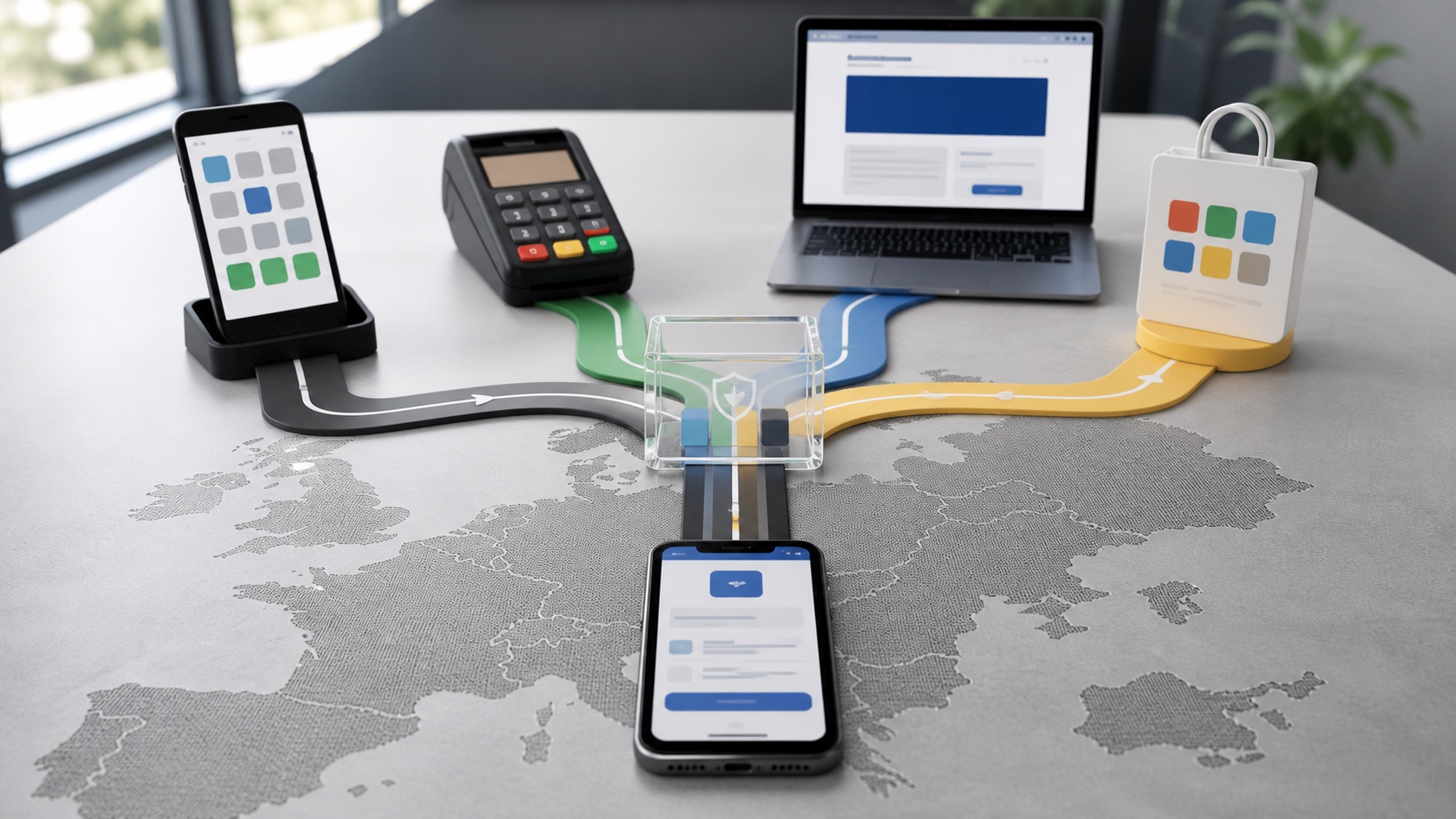
Wero is trying to occupy that space. The flow is simple: the customer chooses Wero during checkout, is redirected to their usual banking app, then confirms the transaction. At Lidl, the flow can also use a QR code depending on the purchase context. The idea is to keep authorization inside the bank environment while giving merchants a fast account-linked payment.
For non-technical customers, the argument is not "EPI," "instant payment" or "sovereignty." The argument is more direct: I pay with my bank, I do not retype my card, I do not create yet another account with a third party, and I approve the transaction in a place I already trust. That readability is what can turn the story mainstream.
The timing also helps. Consumers are used to biometric approvals, instant transfers, mobile wallets and cardless checkout flows. In that context, Wero does not need to explain every technical layer. It needs to prove that the experience works consistently.
What Decathlon brings to Wero
Decathlon is not a random merchant for a payment launch. It has a broad audience, highly varied baskets and frequent relationships with customers who do not only buy premium products. The payment journey therefore has to remain solid for a simple purchase as well as for a more expensive basket.
Decathlon's announcement emphasizes integration on its German website, then preparation for physical stores. That matters. Many payment methods remain trapped in e-commerce or inside an app. Real convenience arrives when users find the same gesture online and at the counter.
If Decathlon brings the flow to its more than 110 German stores, Wero will move into another mental category for customers. It will no longer be only a checkout button on a page. It will become a visible option at the till, next to cards, phone wallets and local payment habits.
That physical presence is hard to earn because it affects terminals, checkout flows, refunds, staff training and error cases. But it also gives a kind of credibility that few marketing campaigns can buy.
What Lidl adds
Lidl brings a different signal: volume and normalization. Discount retail and mainstream e-commerce impose a harsh constraint on payments. If the flow slows down, surprises users or fails, people immediately return to their usual method.
Lidl highlights activation inside the banking app, payments settled in seconds from the current account and compatibility with eighteen participating banks. It also points to potential availability for more than 56 million banking customers in Europe. That number does not mean all those customers will pay with Wero tomorrow, but it shows the banking network the initiative wants to mobilize.
For Wero, Lidl is therefore a test of ordinary trust. The service has to be simple enough for a quick order, reliable enough for refunds and understandable enough to avoid creating support friction. A payment method succeeds when it almost disappears.
Sovereignty is not enough
Wero is backed by the European Payments Initiative, with the ambition of offering a European alternative to large international networks and wallets. That industrial question is real. Payments are not just a commodity: they shape transaction data, merchant relationships, fees, resilience and part of economic independence.
But sovereignty alone does not make a product popular. Users do not want to arbitrate a continental strategy every time they buy something. They want the payment to work, the refund to arrive, the dispute process to be clear and the bank to recognize the transaction properly.
Wero's potential strength is its proximity to established banks. Its potential weakness is the same thing: if the experience varies too much by bank, phone, merchant or country, users will remember inconsistency before they remember sovereignty. The battle is not only against PayPal, Apple Pay or cards. It is against habit.
The questions to watch
The first question is coverage. Wero can be technically available, but it needs enough banks, enough merchants and enough use cases to become obvious. Users rarely keep using a payment method they only encounter once every couple of months.
The second question is support. Consumer payments live in edge cases: abandoned baskets, apparent double charges, partial returns, late refunds, new phones, unsupported accounts, cancelled orders. A payment method becomes credible when those cases are handled cleanly, not only when the ideal transaction succeeds.
The third question is brand recognition. Wero needs to become familiar without becoming worrying. An unknown checkout button can be ignored out of caution. Arriving at retailers such as Decathlon and Lidl helps because merchant trust can reduce the distance to a new payment method.
The fourth question is international execution. Wero wants to speak European, but payment habits remain deeply national. Germany, France, Belgium and the Netherlands do not start from the same place. Success in one country does not guarantee the same traction elsewhere.
What this changes for merchants
For merchants, Wero becomes interesting if integration lowers costs, accelerates flows and simplifies refunds. But they will mainly watch conversion. An extra payment option only has value if it increases checkout completion or replaces a more expensive option without damaging the experience.
The rollout at Decathlon and Lidl gives an early indication: large retailers are willing to test the idea when the banking network and infrastructure look strong enough. If more merchants follow, repetition can do the rest.
The opposite risk also exists. Too many payment methods can make checkout harder to scan. Wero will have to earn its place through usage, not just visibility.
What about French users?
For French users, the German launch does not immediately change every daily purchase. It is more of a signal about product direction. Wero wants to move from person-to-person transfers to merchant payments, then to physical commerce. That progression is what matters.
If the flow expands in France, the decisive factor will be consistency with the banking apps people already use. A mainstream financial service has to inspire trust before it can be impressive. It has to give users a feeling of control, especially when it touches the current account directly.
Wero now has a real opening. Users want simple payments. Merchants want conversion and controlled fees. Banks want to keep their customer relationship. Europe wants less dependence on external infrastructure. Those interests can converge.
The pragmatic conclusion remains simple: Wero will not win because it is European. It will win only if, at Decathlon, Lidl and the next retailers, paying with Wero feels more natural than reaching for a card.

Join the discussion
Comments
Loading comments…