
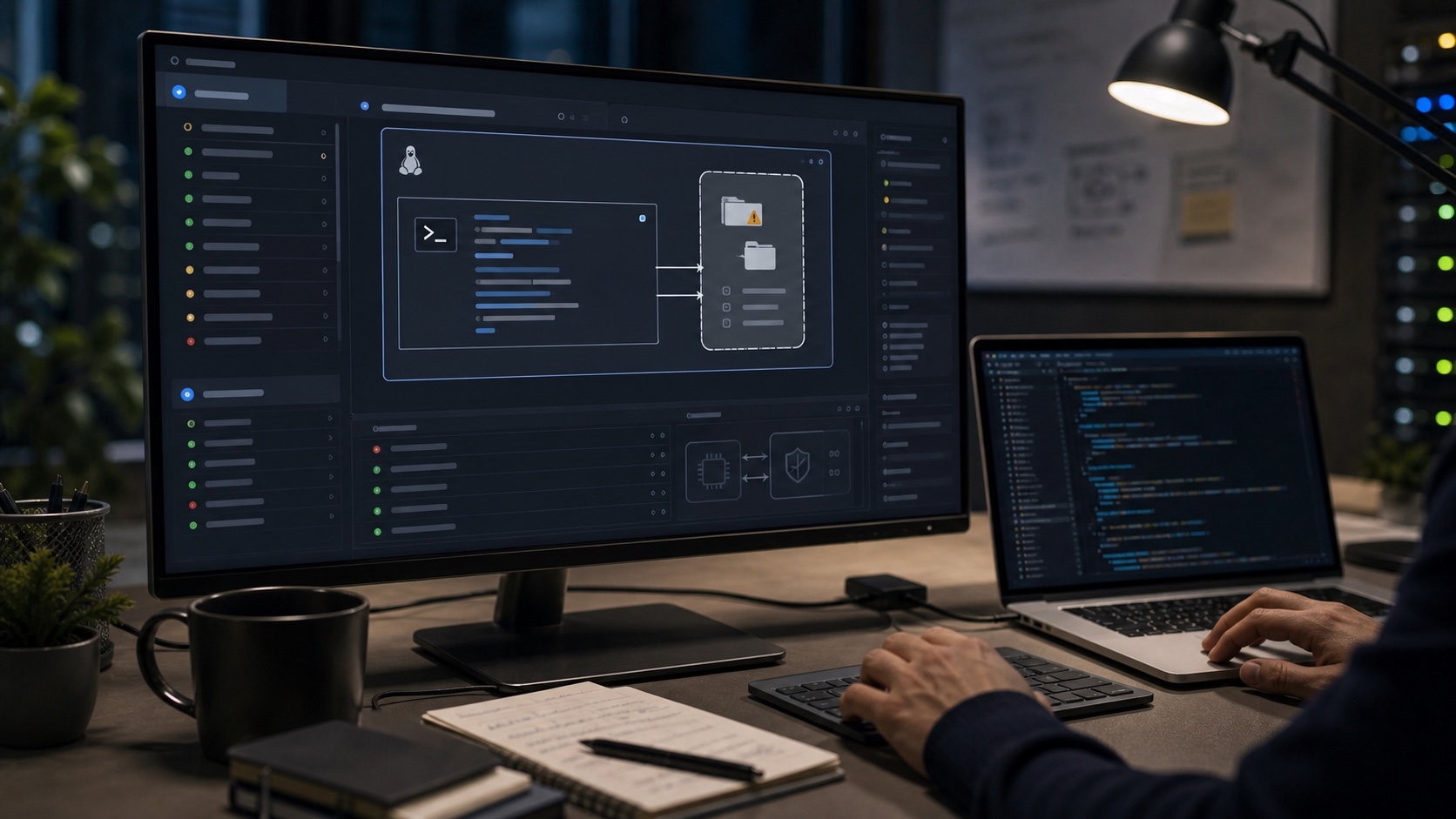
Accomplish AI's SharedRoot write-up highlights an issue many teams will need to examine more seriously: a local AI agent is not just a chatbot with better file access. It is an execution environment that reads documents, manipulates folders, runs code, follows instructions from the web and can act in the context of a signed-in user.
In the case of Claude Cowork, researchers describe an attack chain affecting local sessions on macOS. The agent runs inside a Linux VM, but a combination of architectural choices and a Linux kernel vulnerability, CVE-2026-46331, allegedly made it possible to reach Mac host files beyond the folder explicitly connected by the user. Accomplish named the chain SharedRoot.
The important detail is not a dramatic story about "AI escaping." The point is more concrete: if an agent can consume untrusted content and perform actions, its sandbox becomes a real security boundary. That boundary has to hold against a model mistake, a hostile web page, a malicious repository, a weaponized PDF and ordinary vulnerabilities in the underlying system.
The problem is not only the model
AI agent security is often discussed through prompt injection. That makes sense: an agent reads instructions, some instructions can be hostile and the model can be influenced. But that view is incomplete.
A modern agent is not risky only because it might believe a malicious instruction. It becomes risky when that instruction can trigger a real capability: reading a folder, opening an authenticated browser, running a command, modifying a file, sending a request, extracting a key, publishing a message or deleting content.
The central question is therefore not only "will the model follow the wrong instruction?" It becomes "what can it do if that happens?" That is an architecture question, not just a model behavior question.
In that context, a VM is a good idea, but it should not be treated as a complete answer. A VM reduces risk if it enforces a strong boundary between the agent environment and the user's machine. It becomes fragile if the system invites too much of the host disk into the guest environment.
What SharedRoot describes
Accomplish describes an architecture in which Claude Cowork performs agent work inside a Linux VM created from macOS. The agent starts as an unprivileged user, with restrictions, while folders are mounted to provide access to the files the user wants to share.
The reported chain relies on several steps. First, the environment allows unprivileged user namespaces, which can provide powerful capabilities inside the guest kernel context. Then the agent can reach a Linux networking path involved in CVE-2026-46331, also called pedit COW. NVD describes the flaw as a copy-on-write issue in the Linux kernel traffic-control subsystem, with page-cache corruption risk.
In Accomplish's scenario, that flaw enables privilege escalation inside the VM. That is not yet a Mac compromise. A well-bounded VM should contain this type of incident. The problem arrives at the final layer: according to the report, the host filesystem was exposed read-write inside the VM through a mount visible to guest root. Once root inside the guest, the agent could touch the macOS user's files.
That changes the analysis. The vulnerable Linux kernel provided a route to guest root, but the damage comes mostly from what guest root could reach. That is the difference between a contained bug and an exposure of secrets.
The risk of broad mounts
Sharing files with a VM is normal. Developers do it every day with Docker, test VMs, local CI environments and automation tools. But the scope of the share defines the blast radius.
A read-only project folder is not the same risk as an entire user directory mounted read-write. A temporary task-specific mount is not the same risk as durable disk access. A rule enforced on the host is stronger than a convention inside the guest.
AI agents make that equation harder because they combine three properties that traditional tools rarely combine: they read large amounts of untrusted content, they improvise action plans and they can be given very powerful tools. An unknown open source repository, a customer ticket, a Markdown file or a web page can contain instructions that have no reason to be executed, but that the agent may still absorb into its context.
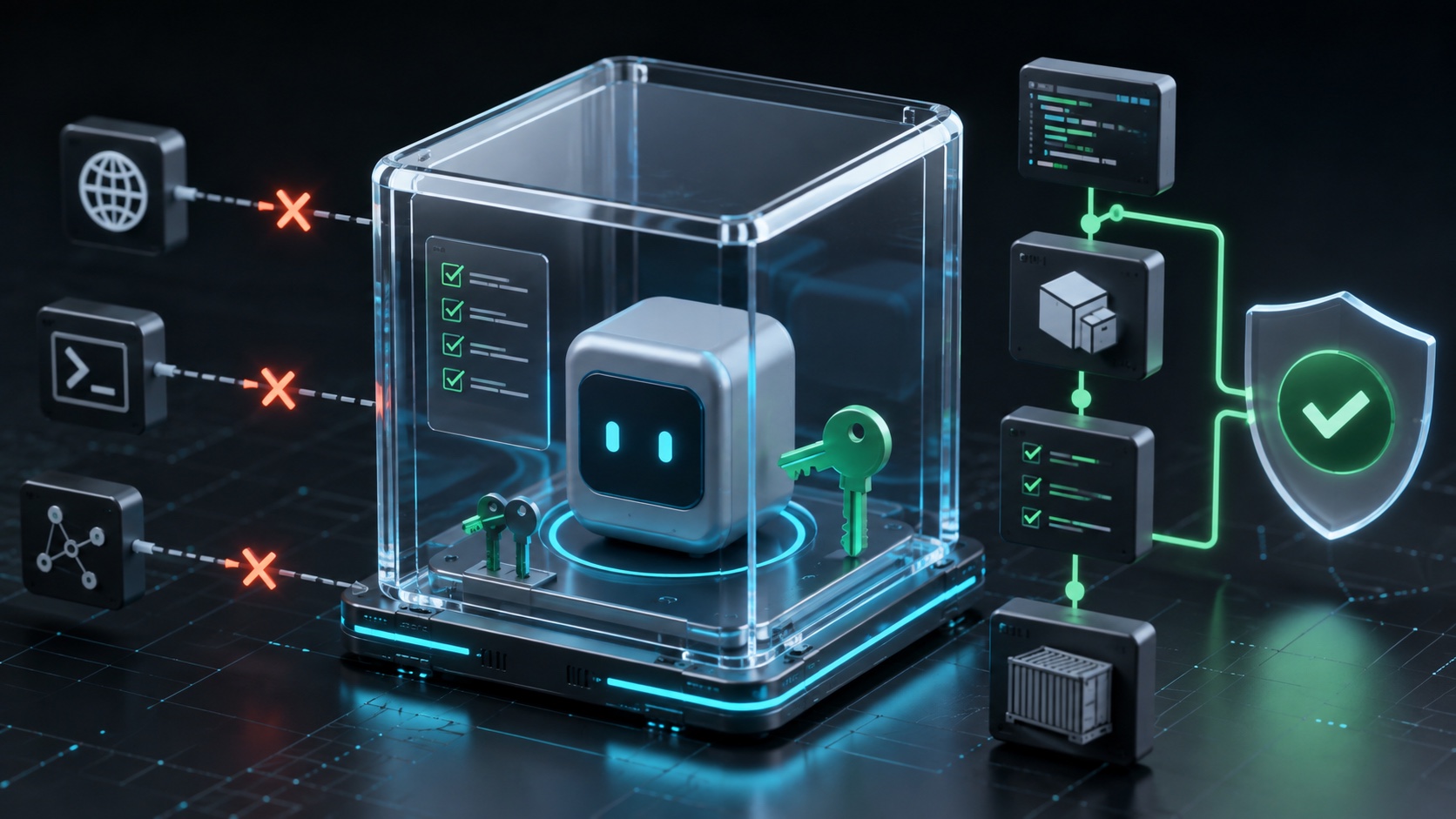
The right defensive stance is therefore to assume the guest will eventually be compromised. That sounds harsh, but it is healthy. If root inside the VM can only see a limited working folder, the incident remains far less severe. If root inside the VM can read SSH keys, cloud tokens, browser profiles or personal documents, the sandbox has not really done its job.
Technical patches are not always enough
CVE-2026-46331 should obviously be patched on affected kernels. Linux environments used by agents, containers or VMs need the same security-update discipline as exposed servers. But Accomplish's article argues for a more durable lesson: a patch closes one path, not the entire class of risk.
The next vulnerability will not necessarily be pedit COW. It may affect another module, another syscall path, another interaction between namespaces, seccomp, mounts and a privileged daemon. If the architecture gives guest root too broad a view of the host system, every local privilege escalation becomes more valuable.
The mitigations discussed around this case point in that direction: reduce unprivileged user namespaces when they are not needed, harden seccomp filters, prevent autoloading of unused kernel modules, mount only the folders required, prefer read-only access where possible and run privileged components with stricter system protections.
These are classic defense-in-depth measures. They simply become more urgent when the environment controls an agent that can be influenced by external inputs.
What Anthropic now says about Cowork
Anthropic's documentation presents Cowork as an agentic capability with access to files, browser and apps through Claude Desktop. It also says Cowork sessions run remotely on Anthropic's servers, inside an isolated temporary environment, and advises users to limit access to sensitive files.
That changes the risk compared with the local scenario described by Accomplish. If execution is remote and the environment cannot directly reach the user's disk, the SharedRoot chain does not apply in the same way. But the lesson still applies to every product that offers, or will offer, local execution.
Teams need to verify the actual execution mode, not rely on a product name. Cloud, local, hybrid, desktop connector, browser extension, MCP, shared folder: each term implies a different surface. For an enterprise, that distinction belongs in security policy, not hidden inside a user interface.
How to use local agents carefully
The first principle is simple: do not give an agent more files than it needs. A dedicated working folder without SSH keys, customer exports, financial documents or production secrets immediately reduces risk.
The second principle is identity separation. An agent on a personal daily-driver machine signed in to every production account does not have the same impact as an agent running in a dedicated profile with limited rights and disposable secrets. Productivity should not turn the main workstation into an exposed vault.
The third principle is to treat untrusted inputs as potential code. An unknown repository, an archive, a web page or a document received by email can contain instructions intended for the agent. That does not mean blocking everything, but write actions, commands and sensitive access should remain under control.
The fourth principle is observability. Teams need to know which agents were used, on which machines, with which folders, which tools and which approval mode. After an incident, the absence of traces makes response almost impossible.
The real conclusion
SharedRoot is not only a Claude Cowork story. It is a warning for the whole desktop AI agent category. Products will keep promising more autonomy, more context and more local integration. That direction is useful, but it turns every agent into an attack surface.
A VM is a good building block. A seccomp filter is a good building block. A folder permission prompt is a good building block. But none of those blocks is enough if the final boundary gives a compromised process access to the host disk.
For users, the reasonable practice is to limit folders and avoid mixing experimental agents with important secrets. For vendors, the bar is higher: the agent has to be designed as untrusted, even when it is working as intended. That is the condition for autonomy to become useful without turning every workstation into a weak point.


Join the discussion
Comments
Loading comments…